




What's Happening?
The Ferrari 250 GT is recognized as a significant family of luxury sports cars produced by the Maranello-based carmaker. This series, named for the 250 cc swept volume of each of its twelve cylinders, utilized Gioacchino Colombo's three-liter V12 engine.
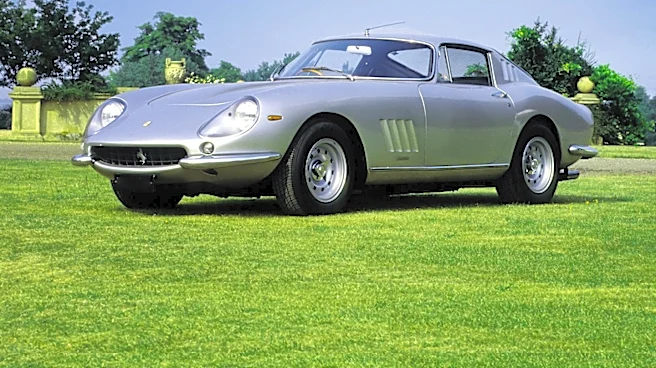
This engine powered Ferrari's road and GT cars from the 250 S in 1952 to the final Lusso model in 1964, as well as competition cars like the Testa Rossa, 250 P, and 250 LM. The 250 GT chassis, available in long (2,600 mm) and short (2,400 mm) wheelbases, featured bodies crafted by renowned coachbuilders such as Pinin Farina, Vignale, Boano, Ellena, Zagato, Bertone, and Sergio Scaglietti. The series encompasses a dozen distinct types, including the 250 Europa, Europa GT, Boano and Ellena coupés, Berlinetta 'Tour de France,' Cabriolet Series I and II, Coupé Pinin Farina, California Spider (LWB and SWB), SWB Berlinetta, GT/E 2+2, and the Lusso, with the GTO serving as the competition variant. Approximately 2,500 units were built in total, with the GT/E accounting for 954 of these, while some of the rarest types number only in the dozens.
Why It's Important?
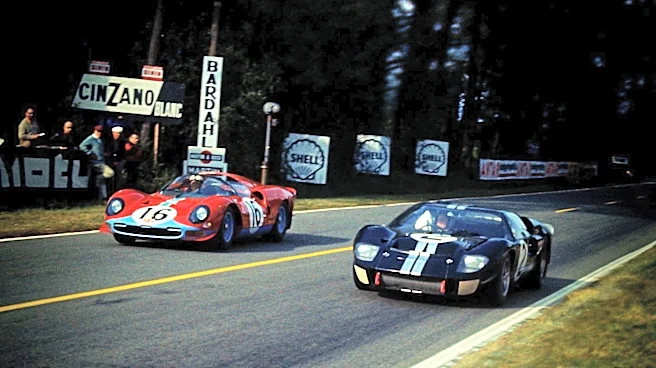
The Ferrari 250 GT series holds immense importance in automotive history, establishing Ferrari as a prominent road-car company while simultaneously achieving significant racing success. These vehicles secured victories in prestigious events such as the Tour de France Automobile every year from 1956 to 1964, the Tourist Trophy in 1960 and 1961 with Stirling Moss, and the GT class at Le Mans from 1959 to 1963. They also triumphed in the Targa Florio and Sebring GT classes and clinched the first three FIA GT championships. The ability of these cars to be driven to the circuit and then compete successfully underscored their dual nature of luxury and performance. Furthermore, the 250 GT family represents some of the most valuable automobiles globally, with models like the GTO being the most expensive car ever sold, and California Spiders and SWB Berlinettas fetching over $17 million. Even the GT/E, once considered less desirable, now commands prices around half a million dollars, highlighting the enduring appeal and investment value of these classic Ferraris.
What's Next?
While the production of the Ferrari 250 GT series concluded in 1964, its legacy continues to evolve through the classic car market and automotive heritage events. The ongoing appreciation in value for these vehicles suggests continued strong demand from collectors and enthusiasts worldwide. Future developments will likely involve further record-breaking auction sales for rare models, as well as increased participation in historic racing events and concours d'elegance. Ferrari's own heritage programs and museums will continue to showcase these iconic models, preserving their history and influence for future generations. The enduring allure of the 250 GT series also influences contemporary Ferrari design and engineering, as the company often draws inspiration from its rich past to inform its future models, ensuring that the spirit of the 250 GT lives on in modern automotive innovation.
Beyond the Headlines
Beyond its immediate market value and racing achievements, the Ferrari 250 GT series represents a pinnacle of automotive design, engineering, and cultural impact. These cars embody an era where performance and elegance were seamlessly integrated, setting benchmarks for luxury sports cars. The collaboration with various coachbuilders like Pinin Farina and Scaglietti highlights a unique period in automotive manufacturing where artistry played a crucial role in vehicle aesthetics. The 250 GT's influence extends into popular culture, with models like Steve McQueen's Ferrari 250 GT Berlinetta Lusso becoming iconic. Ethically, the preservation and restoration of these vehicles contribute to maintaining automotive history and craftsmanship. Legally, the high value of these cars often leads to complex ownership and provenance issues, making their history and authenticity critical. Culturally, the 250 GT remains a symbol of Italian excellence, passion, and engineering prowess, continuing to inspire automotive enthusiasts and designers globally.