






What's Happening?
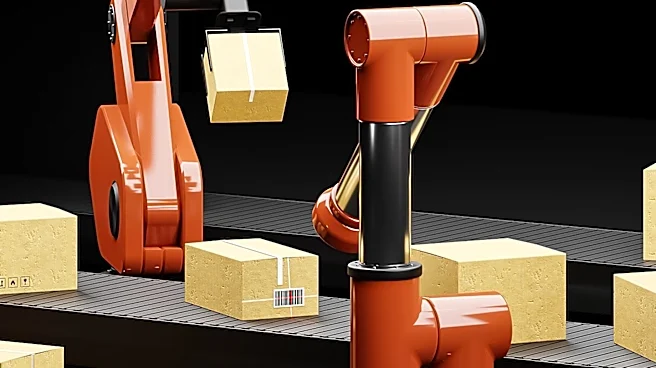
DHL Supply Chain is currently piloting adaptive AI-powered robots and integrating AI orchestration into its live warehouse operations. This initiative is part of a broader strategy to coordinate robotics, artificial intelligence, and human workers across
its global logistics network. The company's Intelligent Supply Chain framework aims to move beyond automating individual tasks to orchestrating entire warehouse workflows. Unlike traditional warehouse robots that follow predefined instructions, these adaptive robots are designed to interpret changing conditions and adjust their actions to achieve specific goals. DHL is testing these capabilities alongside AI orchestration software that connects employees, automated equipment, and operational data. Following a successful proof of concept, the orchestration technology is now being introduced into operational warehouses. One application being tested combines autonomous mobile robots, packaging equipment, and warehouse management systems to dynamically allocate resources based on fluctuating order volumes. Tim Tetzlaff, global head of digital transformation at DHL Supply Chain, stated that the immediate priority is to scale proven robotics across more sites and transition next-generation adaptive AI-powered robotics from pilots to live operations. DHL has already deployed over 9,000 robots globally, completing more than 1.5 billion robotic picks, and over 95% of its warehouses worldwide utilize advanced digitalization technologies.
Why It's Important?
This development by DHL Supply Chain is significant for the U.S. logistics and supply chain industry, as it represents a major step towards more flexible, efficient, and resilient warehouse operations. The integration of adaptive robotics and AI orchestration can help U.S. businesses better manage demand fluctuations, a critical challenge highlighted by recent global supply chain disruptions. By optimizing both information flow (digital AI) and material flow (physical AI), DHL's approach could set a new standard for operational efficiency, potentially reducing costs and improving delivery times for goods across the country. The ability of adaptive robots to adjust to changing conditions means less downtime and more dynamic resource allocation, which is crucial for industries with variable demand. Furthermore, the emphasis on human-robot collaboration, where robots handle repetitive tasks and humans focus on higher-value activities, could lead to improved working conditions and a more skilled workforce in U.S. warehouses. This shift could also influence investment in automation technologies by other logistics providers and manufacturers in the U.S., driving innovation and competitiveness in the sector. Companies that adopt similar strategies stand to gain a significant advantage in a rapidly evolving market.
What's Next?
DHL Supply Chain plans to continue scaling its proven robotics across more sites and transition its next-generation adaptive AI-powered robotics from pilot programs into live operations. The company will focus on further integrating physical AI, which controls robots, with digital AI, which analyzes information and supports operational decisions, to create a more efficient, flexible, and resilient end-to-end supply chain. DHL also intends to expand the use of its analytics and AI solutions, which have already seen over 1,400 implementations across its network, with more than 500 in 2026 alone. The company will continue to emphasize the role of human employees, positioning them as central to the automation strategy by leveraging their operational expertise and judgment while robots handle repetitive tasks. This ongoing development and deployment of advanced robotics and AI orchestration are expected to further enhance productivity and operational flexibility within DHL's global logistics network, with potential implications for the broader U.S. logistics industry as these technologies mature and become more widely adopted.
Beyond the Headlines
The deployment of adaptive robotics and AI orchestration by DHL Supply Chain signals a deeper transformation in the nature of work within the logistics sector. This shift moves beyond simple automation to a more sophisticated human-machine collaboration, where AI not only performs tasks but also orchestrates complex workflows and adapts to unforeseen circumstances. This could lead to a redefinition of job roles, requiring workers to develop new skills in overseeing and interacting with intelligent systems rather than performing purely manual labor. The ethical implications of such advanced AI in decision-making, particularly concerning resource allocation and operational adjustments, will become increasingly relevant. Furthermore, the extensive data collection and analysis inherent in AI orchestration raise questions about data privacy and security within the supply chain. The long-term impact could be a more resilient and responsive supply chain that is less susceptible to disruptions, but it also necessitates careful consideration of the societal and economic consequences of widespread AI adoption, including potential impacts on employment and the need for continuous workforce retraining.