



What's Happening?
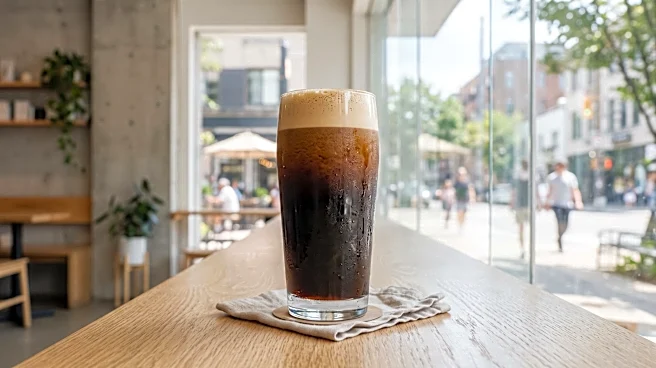
Blue Bottle Coffee, a U.S.-based roaster and retail coffee company, has been identified as a key innovator in the nitro cold brew segment. The company is noted for its national presence and its ownership by Nestlé. This information comes from an analysis
of the unsweetened cold brew coffee market, which highlights major participants and trends within the industry. Blue Bottle Coffee is listed among significant players in the Ready-to-Drink (RTD) beverages, foodservice and cafés, and online retail and direct-to-consumer (DTC) channels. The market analysis underscores the growing consumer demand for clean-label, low-sugar beverages, positioning unsweetened cold brew as a healthier alternative to traditional sweetened RTD coffee and energy drinks. The company's involvement in these various channels reflects its strategic positioning within the evolving coffee market, particularly as consumers increasingly seek convenient and health-oriented options.
Why It's Important?
The identification of Blue Bottle Coffee as a nitro cold brew innovator and a Nestlé-owned entity is important for several reasons within the U.S. market. Firstly, it highlights the strategic investments by large multinational corporations like Nestlé into specialized, premium coffee segments, indicating a broader trend of consolidation and market capture in the beverage industry. Secondly, Blue Bottle's role as an innovator in nitro cold brew signifies the ongoing evolution of coffee products, catering to consumer preferences for unique textures and preparation methods. This innovation drives competition and encourages other brands to develop new offerings, ultimately benefiting consumers with a wider range of choices. Lastly, the company's presence across multiple sales channels—RTD, cafés, and DTC—demonstrates a comprehensive market strategy aimed at maximizing reach and catering to diverse consumer purchasing habits, from on-the-go convenience to curated café experiences and online subscriptions. This multi-channel approach is crucial for sustained growth in a competitive market driven by health-conscious and convenience-seeking consumers.
What's Next?
Looking ahead, Blue Bottle Coffee, under Nestlé's ownership, is likely to continue leveraging its position as a nitro cold brew innovator to capitalize on the expanding market for unsweetened and functional coffee beverages. The company's participation in the fastest-growing online retail and DTC channels suggests a continued focus on subscription models and personalized offerings, which are key trends in consumer goods. As the market for unsweetened cold brew coffee is projected to grow, driven by health-conscious consumers and expanding chilled distribution, Blue Bottle Coffee will likely intensify its efforts in product development and market penetration. This could involve further innovation in packaging, flavor profiles, and strategic partnerships to enhance its presence in grocery stores and foodservice establishments. The broader market trend of premiumization and the shift towards clean-label products will also influence Blue Bottle's future strategies, potentially leading to more emphasis on sourcing narratives and sustainable practices to differentiate its brand.
Beyond the Headlines
Beyond the immediate market dynamics, Blue Bottle Coffee's role as a Nestlé subsidiary in the U.S. cold brew market reflects deeper implications regarding corporate influence on consumer trends and the evolving definition of 'specialty coffee.' While Blue Bottle initially gained recognition for its artisanal approach and commitment to quality, its acquisition by Nestlé raises questions about the balance between maintaining craft integrity and achieving mass-market scalability. This dynamic is a microcosm of the broader industry trend where independent, niche brands are often absorbed by larger conglomerates, leading to both increased distribution and potential shifts in brand identity. Furthermore, the emphasis on nitro cold brew highlights a cultural shift in coffee consumption, moving beyond traditional hot beverages to more experiential and convenience-driven formats. This evolution challenges conventional coffee shop models and underscores the importance of continuous innovation to capture consumer interest in a rapidly changing beverage landscape.