





What's Happening?
Multiply Labs, a San Francisco-based company specializing in robotic systems for pharmaceutical manufacturing, has successfully raised $75 million in Series B financing. This funding round, led by Dr. Patrick Soon-Shiong of NantWorks, with significant
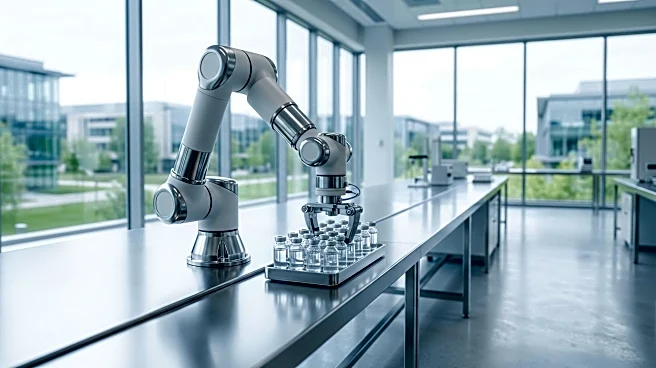
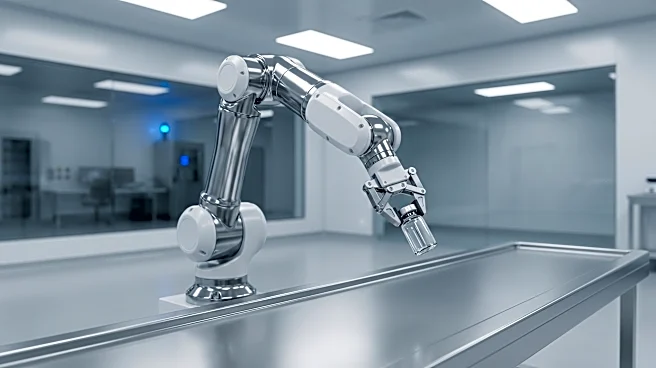
participation from AstraZeneca, Lingotto, Teradyne, Strange Ventures, and existing investors, brings the company's total funding to over $100 million. The capital infusion is earmarked for expanding Multiply Labs' robotic manufacturing platform, which automates the production of cell and gene therapies and other biologic medicines. The company plans to increase its manufacturing capacity, enhance its technological capabilities, and grow its engineering, regulatory, and commercial teams to support commercial-scale operations. Initially focused on cell and gene therapy manufacturing, the platform is now being extended to include other biologic modalities such as antibodies, viral vectors, and messenger RNA (mRNA) therapies. These robotic systems are designed to integrate with existing manufacturing instruments, allowing pharmaceutical and biotechnology companies to deploy and manage the technology within their own facilities.
Why It's Important?
This significant investment in Multiply Labs underscores a critical shift in the pharmaceutical industry towards automated manufacturing, particularly for complex advanced therapies. The expansion of robotic manufacturing capacity is crucial for addressing current bottlenecks in the production of cell and gene therapies, which are increasingly vital for treating various diseases. As artificial intelligence accelerates drug discovery, the ability to manufacture these new therapies at scale becomes paramount. By automating manual processes, Multiply Labs aims to bridge the gap between the rapid development of new treatments and the capacity to produce them, ensuring more patients can access these life-saving medicines. This development is particularly important for the U.S. healthcare sector, as it can lead to more efficient and cost-effective production of advanced therapies, potentially reducing treatment costs and increasing availability. The involvement of major pharmaceutical players like AstraZeneca also signals a broader industry recognition of the necessity for such technological advancements to meet future demand and improve operational efficiency.
What's Next?
With the new funding, Multiply Labs is set to significantly scale its operations. The company will focus on expanding its robotic manufacturing platform to support a wider range of biologic medicines, including antibodies, viral vectors, and mRNA therapies. This expansion will involve increasing manufacturing capacity and enhancing its technology, alongside growing its engineering, regulatory, and commercial teams. The goal is to transition towards commercial-scale operations, making its automated manufacturing solutions more widely available to pharmaceutical and biotechnology companies. Multiply Labs also has a commercial and supply agreement with Retro Biosciences, valued at up to $85 million, to automate manufacturing processes for cell therapies targeting age-related diseases, indicating future collaborations and deployments. The company's continued growth will likely intensify competition within the automated cell therapy manufacturing market, pushing further innovation in the sector.
Beyond the Headlines
The investment in Multiply Labs highlights a broader trend of industrial automation intersecting with advanced biotechnology. The integration of robotics and AI in pharmaceutical manufacturing not only addresses current production challenges but also sets a precedent for future drug development and delivery. This shift could lead to a more resilient and responsive pharmaceutical supply chain, less susceptible to human error and labor shortages. Furthermore, by making the manufacturing of complex therapies more efficient, it could democratize access to cutting-edge treatments, potentially reducing health disparities. The ethical implications of highly automated drug production, including job displacement and the need for new skill sets in the workforce, will also become increasingly relevant. This technological evolution could fundamentally reshape the pharmaceutical landscape, moving towards a future where personalized medicine is not only discovered but also manufactured at an unprecedented scale.