
What's Happening?
The National Strength and Conditioning Association (NSCA) has issued its first revised performance guidelines for women in 37 years, asserting that the foundational principles of strength training apply
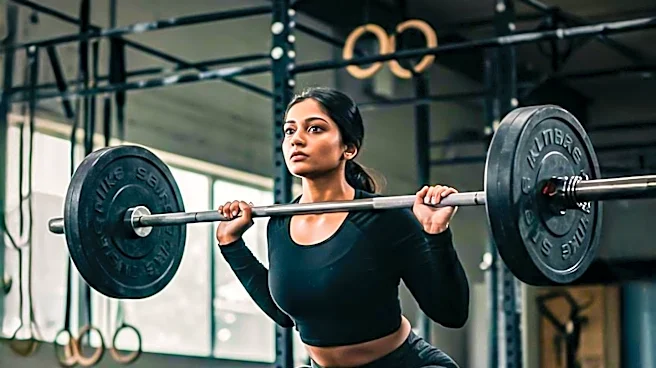
equally to women and men. These new guidelines challenge outdated assumptions that women require a 'softer approach' to resistance training. The NSCA highlights that girls respond similarly to strength and conditioning programs as boys and that historical disparities in strength are often due to less encouragement for females to lift weights. The recommendations emphasize the importance of strength training throughout a woman's entire life, from youth to postmenopause, to maximize bone density, counteract age-related muscle loss, and mitigate risks for specific injuries like ACL tears and bone stress injuries.
Why It's Important?
These updated guidelines are crucial for U.S. female athletes and women across all demographics, as they aim to dismantle long-standing misconceptions that have potentially limited women's strength and performance. By advocating for equal training principles, the NSCA seeks to empower women to engage in more effective resistance training, which is vital for long-term health, bone density, and injury prevention. This shift in guidance can influence coaching methodologies, fitness program development, and public perception, potentially leading to increased participation of women in strength training and improved health outcomes. It also has implications for the fitness industry, encouraging the creation of more inclusive and challenging programs for women, moving beyond gender-stereotyped approaches.
What's Next?
The NSCA's new guidelines are expected to drive changes in how strength and conditioning professionals train female athletes, promoting more rigorous and evidence-based programs. This could lead to a greater focus on strength training from a young age for girls, aiming to build foundational bone density and reduce injury risk. The fitness industry may see further growth in women-focused strength training facilities and programs that align with these updated recommendations. Research into female-specific biological differences in health and performance will likely continue, providing more nuanced insights while still upholding the core principle of equal training efficacy. The long-term impact could be a healthier, stronger female population with reduced incidence of age-related conditions and injuries.
Beyond the Headlines
The NSCA's revised guidelines reflect a broader societal shift towards gender equality in sports and health, challenging deeply ingrained biases about female physical capabilities. The argument that 'so much of what we blame on women’s bodies may really come down to women being undertrained' highlights the social and cultural factors that have historically limited women's athletic potential. This move encourages a re-evaluation of how gender influences training and health recommendations, promoting an approach based on scientific evidence rather than stereotypes. It also underscores the importance of accessible and accurate information in empowering individuals to make informed health decisions, fostering a more equitable and effective fitness landscape for all.