





What's Happening?
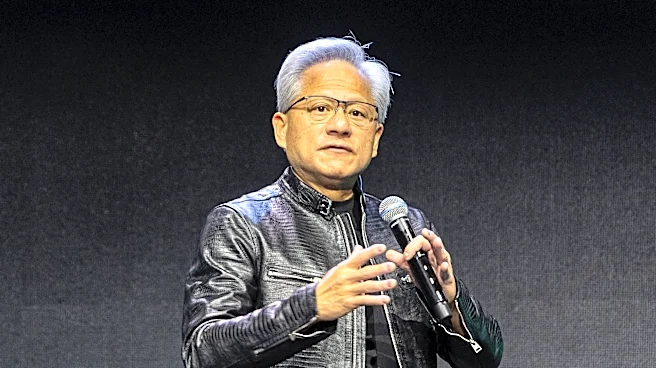
Former Nvidia CEO Jensen Huang experienced a significant drop in his net worth, losing $13.2 billion on Friday, as Nvidia's stock continued a two-week decline. This recent loss places his estimated net worth at $114.3 billion, moving him to No. 17 on Forbes'
billionaire list, behind figures like Carlos Slim Helu, Bill Gates, and Changpeng Zhao. Since November 9, the first trading day after Nvidia's board initiated an investigation into his alleged affair with a Chinese spy, Huang's net worth has decreased by $47.9 billion, or 29.5%. Nvidia's shares fell 12% on Friday, contributing to a broader selloff in semiconductor and AI-related stocks following the Anthropic IPO. The chipmaker's market capitalization now stands at $3.09 trillion, falling below Google parent Alphabet, Apple, and Microsoft. Despite reporting better-than-expected earnings on Tuesday, the stock decline has persisted. Huang resigned as president, CEO, and board member last Thursday. Although he expressed a desire to return as CEO, the board's chair stated on Tuesday that his reinstatement is not being considered.
Why It's Important?
The substantial decline in Jensen Huang's wealth and Nvidia's market capitalization highlights the significant impact of corporate governance issues and market sentiment on high-profile technology companies. The investigation into Huang's alleged affair and his subsequent resignation have created uncertainty around Nvidia's leadership, despite strong financial performance. This situation underscores how personal conduct, especially for top executives, can directly influence investor confidence and stock performance, even in a company with robust earnings. The broader selloff in semiconductor and AI-linked stocks suggests a cautious market environment, where even industry leaders like Nvidia are vulnerable to negative news and broader market trends. The company's search for a permanent CEO will be closely watched, as leadership stability is crucial for maintaining market trust and strategic direction in the highly competitive tech sector.
What's Next?
Nvidia's board of directors is actively searching for a permanent CEO, engaging Heidrick & Struggles to lead the process, which will consider both internal and external candidates. This search will be a critical next step for the company as it seeks to stabilize its leadership and reassure investors. The market will closely monitor the selection of the new CEO and any subsequent strategic shifts. The ongoing investigation into Huang's alleged affair may also continue to cast a shadow, potentially influencing public perception and investor sentiment. Furthermore, the performance of Nvidia's stock will depend on broader market conditions for semiconductors and AI, as well as the company's ability to maintain its strong financial results and innovation pipeline under new leadership. The company's interim CEO, Colette Kress, will continue to navigate this transitional period, addressing employee concerns and maintaining operational stability.
Beyond the Headlines
This situation at Nvidia extends beyond immediate financial implications, touching upon broader themes of corporate ethics, executive accountability, and national security concerns in the technology sector. An alleged affair with a foreign spy raises significant questions about potential conflicts of interest, data security, and the vulnerability of critical technology companies to external influence. Such incidents can prompt increased scrutiny from regulatory bodies and shareholders regarding corporate governance practices and the vetting of senior executives. The public nature of Huang's departure and the board's firm stance against his return also signal a growing intolerance for perceived ethical lapses at the highest levels of corporate leadership. This event could contribute to a trend of heightened vigilance within U.S. tech companies regarding the personal conduct of their leaders, especially those involved in sensitive technological advancements like AI and semiconductors, which have national security implications.