

What's Happening?
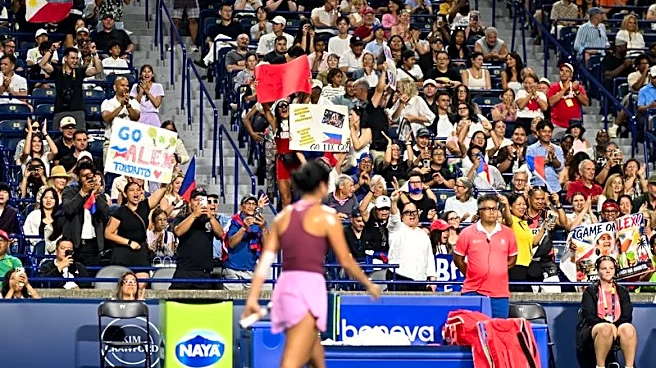
American tennis player Madison Keys has voiced her support for Alexandra Eala's decision to compete in the Asian Games, even though it means skipping the mandatory China Open WTA 1000 event. Eala, representing the Philippines, faces a potential fine from
the WTA Tour for missing the mandatory tournament. Keys highlighted the significant cultural and sporting importance of the Asian Games, stating, "The Asian Games are huge. The crowds are going to be insane." This sentiment is echoed by other American players, including Desirae Krawczyk and Jessica Pegula, who believe Eala should not be penalized for prioritizing national representation in an event that occurs less frequently than WTA tournaments. Eala's choice has proven successful on court, as she secured at least a bronze medal by reaching the semifinals of the Asian Games.
Why It's Important?
This situation underscores a recurring tension between national team commitments and professional tour obligations in individual sports like tennis. For players from countries where events like the Asian Games hold immense national pride and offer a rare platform for international recognition, prioritizing such events can be a deeply personal and career-defining decision. A potential fine from the WTA could set a precedent that discourages players from participating in non-WTA sanctioned events, even those with significant regional importance. The support from prominent American players like Keys, Krawczyk, and Pegula adds weight to the argument for flexibility within WTA rules, acknowledging the broader impact of tennis beyond the traditional tour circuit. It highlights the need for governing bodies to consider the unique circumstances and cultural significance of various tournaments for a diverse international player base.
What's Next?
The Philippine federation has already requested an exemption for Alexandra Eala from the WTA fine. The WTA Tour will need to decide whether to uphold its mandatory tournament rules or grant an exemption, potentially influenced by the public support from other players. If the WTA decides to fine Eala, she will likely have the option to appeal the decision. The outcome of this case could influence future policies regarding player participation in multi-sport events like the Asian Games or Olympics versus mandatory professional tour events. It may also prompt discussions within the WTA about creating more flexible rules or specific exemptions for players representing their countries in significant regional competitions that do not occur annually.
Beyond the Headlines
The debate surrounding Eala's decision touches upon the evolving landscape of professional sports, where athletes increasingly balance personal career aspirations with national duties and cultural pride. For many players, especially those from smaller tennis nations, representing their country in events like the Asian Games can be a powerful source of inspiration and a way to grow the sport in their home regions. The WTA's decision will reflect its stance on supporting global tennis development versus strictly enforcing its tour structure. This case could spark a broader conversation about player welfare, the commercial interests of professional tours, and the intrinsic value of national representation in sports, potentially leading to a re-evaluation of mandatory participation rules across various professional sports organizations.