
What's Happening?
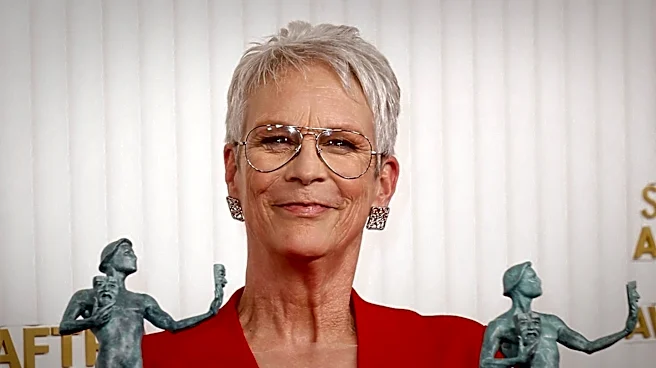
Jamie Lee Curtis has responded to social media criticism regarding a recent birthday post where she discussed her immediate family. On her 68th birthday, Curtis shared a post mourning that she was “the
only surviving family member of my immediate family and my immediate second family,” and therefore, “the last in the line.” Her post included photos of her parents, actors Tony Curtis and Janet Leigh, her stepfather Robert Brandt, and her sister Kelly, who passed away this year. Some commenters on social media criticized Curtis for not including her living half-siblings from her father’s later marriages—Alexandra, Allegra, and Ben. In a follow-up Instagram post on Monday, Curtis addressed the backlash, stating, “Oh my goodness, Internet. Really? Is it such a slow news cycle that you have to turn this into a beef or me throwing shade? Come on. You know better than that. Or do you?” She clarified that “immediate family means my immediate family,” referring to her mother, father, sister Kelly, and stepfather. Curtis also reassured her followers that her extended family, including all of her father’s children from other marriages and their descendants, are “fully intact” and in “direct communication.”
Why It's Important?
This incident highlights the intense scrutiny public figures face on social media, where personal expressions can be quickly misinterpreted or criticized. For celebrities like Jamie Lee Curtis, navigating the public's perception of their private lives, especially during moments of grief or reflection, can be challenging. The backlash underscores how online communities often project their own interpretations onto public statements, sometimes leading to unintended controversies. Curtis's need to clarify her definition of 'immediate family' publicly demonstrates the pressure on public figures to manage their narratives in the digital age. This situation also reflects a broader societal trend where personal grief and family dynamics, when shared publicly, can become subjects of widespread debate and judgment, regardless of the individual's intent.
What's Next?
Jamie Lee Curtis has already issued a clarification, which may help to quell the immediate social media controversy. However, the incident serves as a reminder for public figures about the careful consideration required when sharing personal reflections online, particularly concerning sensitive topics like family and loss. While this specific issue may fade, the broader challenge of managing public perception and online criticism will likely remain a constant for celebrities. This event could also encourage more nuanced discussions among social media users about empathy and the boundaries of public commentary on personal matters. For Curtis, her focus will likely return to her professional endeavors, but the experience may influence her future approach to personal disclosures on public platforms.
Beyond the Headlines
Beyond the immediate social media kerfuffle, this event touches on deeper themes of family definitions, grief, and public versus private life in the digital age. Curtis's distinction between 'immediate' and 'extended' family, while clear to her, was not universally understood by her online audience, revealing how personal definitions of family can vary and how these variations can be amplified in public discourse. The incident also highlights the often-unforgiving nature of online commentary, where empathy can be overshadowed by quick judgments and the pursuit of 'drama.' It underscores the emotional labor required of public figures to defend their personal narratives against misinterpretation, even during vulnerable moments. This situation serves as a micro-example of how social media can both connect and complicate human relationships, particularly when personal boundaries are blurred by public visibility.