



What's Happening?
The U.S. labor market is experiencing a shift where the breakeven rate of employment growth has turned negative, indicating that payrolls may stagnate or shrink while the unemployment rate remains steady. This development is attributed to President Trump's
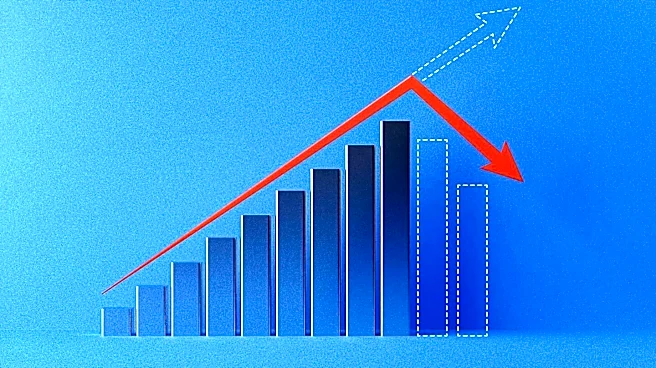
immigration policies and the retirement of baby boomers, which have reduced the labor pool. Historically, monthly job gains of 125,000 to 150,000 were needed to maintain a stable unemployment rate. However, recent reports from Dallas Fed economists and Oxford Economics suggest that the breakeven rate has decreased to about 50,000 new jobs per month, down from over 200,000 in previous years. This change suggests that the labor market may not require as many new jobs to keep unemployment steady, potentially leading to a jobless expansion.
Why It's Important?
The shift in the labor market's dynamics could have significant implications for the U.S. economy. A lower breakeven rate means that fewer jobs are needed to maintain current unemployment levels, which could lead to stagnation in job growth. This situation may affect industries differently, with sectors like healthcare potentially remaining stable due to their resilience to economic cycles. The reduction in the labor force, driven by restrictive immigration policies and an aging population, could lead to a tighter labor market, impacting wage growth and employment opportunities. Additionally, the Federal Reserve may not intervene with rate cuts unless there is a significant increase in unemployment, suggesting a cautious approach to monetary policy.
What's Next?
Economists predict that the breakeven rate will continue to fall, potentially reaching zero next year and turning negative by 2028. This trend could result in a jobless expansion, where employment growth remains minimal while unemployment stays stable. The labor market's future will depend on various factors, including the continuation of current immigration policies and the pace of baby boomer retirements. Businesses may need to adapt to a low-hire, low-fire environment, potentially leading to labor hoarding as companies anticipate a tighter labor market. The Supreme Court's recent ruling on temporary protected status for noncitizen workers could further reduce the documented labor force, adding pressure to the unemployment rate.