






What's Happening?
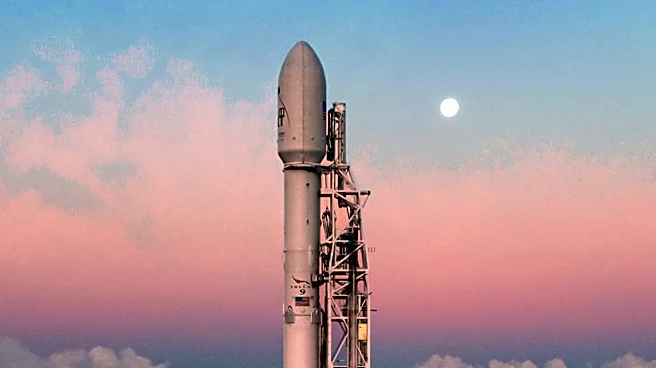
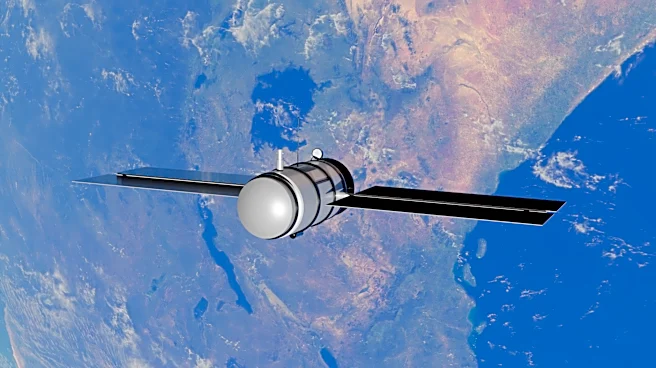
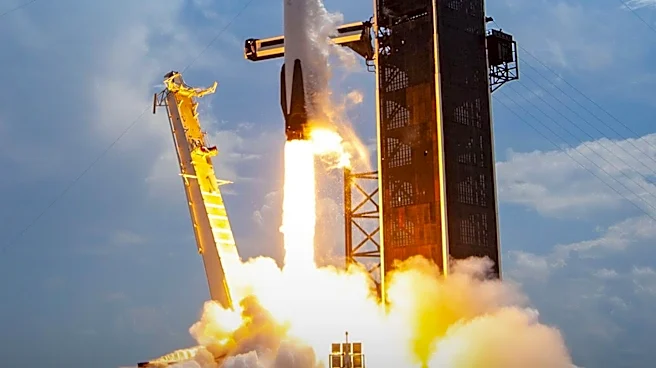
SpaceX successfully launched a Falcon 9 rocket from Vandenberg Space Force Base, carrying 24 Starlink satellites into low-Earth orbit. The launch, part of SpaceX's ongoing efforts to expand its broadband internet constellation, took place at 8 p.m. PDT.
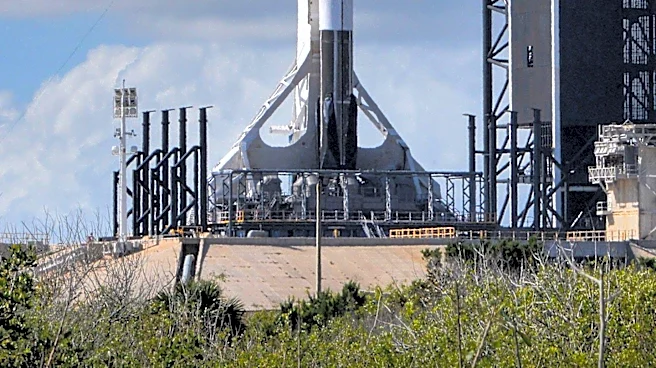
The mission utilized booster B1071, which completed its 35th flight, demonstrating SpaceX's commitment to reusability. The booster landed on the drone ship 'Of Course I Still Love You' in the Pacific Ocean, marking another successful recovery. SpaceX's Starlink network, which now includes over 10,700 satellites, aims to provide global broadband internet coverage.
Why It's Important?
The continued expansion of SpaceX's Starlink constellation is significant for global internet connectivity, particularly in remote and underserved areas. By increasing the number of satellites in orbit, SpaceX enhances its ability to offer reliable and high-speed internet services worldwide. The successful reuse of the Falcon 9 booster underscores SpaceX's leadership in reducing launch costs through reusability, setting a benchmark for the aerospace industry. This launch also highlights the growing importance of satellite internet as a competitive alternative to traditional broadband services, potentially impacting telecommunications markets globally.
What's Next?
SpaceX plans to continue its aggressive launch schedule to further expand the Starlink network, with more launches expected from both Vandenberg and Cape Canaveral. The company is also working on improving the performance and capacity of its satellite network to meet increasing demand. As SpaceX progresses, regulatory and competitive challenges may arise, particularly as other companies and countries develop their satellite internet solutions. The success of Starlink could influence future policies on satellite internet regulation and spectrum allocation.