








What's Happening?
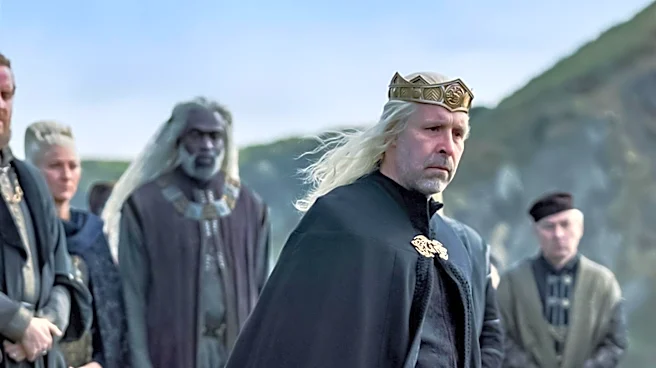
The HBO series 'House of the Dragon,' a prequel to 'Game of Thrones,' recently completed its third season, focusing on the Targaryen dynasty. The season delves into the complexities of political power and managerial leadership, particularly through the character
of Queen Rhaenyra Targaryen. After seizing the throne, Rhaenyra faces numerous challenges, including an empty treasury, demands from allies, and logistical issues within the palace. The show emphasizes that effective leadership is less about battlefield glory and more about managing continuous meetings and demands. This season highlights the intricate nature of obtaining and maintaining power, echoing themes from its predecessor, 'Game of Thrones,' by questioning why those who desire power are often ill-suited for it, and suggesting that factors beyond bloodline, armies, or dragons are crucial for success.
Why It's Important?
The series' exploration of managerial leadership within a high-stakes political environment offers a compelling narrative that resonates beyond its fictional setting. It underscores the universal challenges faced by leaders in any organization, whether governmental or corporate, where the day-to-day realities often involve navigating complex administrative tasks, resource allocation, and stakeholder demands rather than grand strategic maneuvers. This perspective can influence how audiences perceive leadership roles, shifting focus from charismatic figures to those adept at operational management. For the entertainment industry, this approach demonstrates a successful strategy for developing nuanced storytelling that combines epic fantasy with relatable themes of governance and administration, potentially inspiring similar narrative directions in future productions.
What's Next?
While the source does not explicitly detail future seasons, the ongoing success and critical reception of 'House of the Dragon' suggest that HBO will continue to develop the series. Future seasons are likely to further explore the political machinations and leadership challenges within the Targaryen dynasty, potentially delving deeper into the consequences of Rhaenyra's reign and the broader impact of the civil war. The show's focus on the practicalities of governance could evolve, presenting new dilemmas and character developments that continue to examine the nature of power and leadership. Viewers can anticipate continued intricate plotlines and character-driven narratives that maintain the series' reputation for sophisticated storytelling.
Beyond the Headlines
The series' portrayal of leadership as a demanding managerial role, rather than solely a heroic one, offers a subtle critique of traditional power narratives. It suggests that the true exercise of power often involves mundane, yet critical, administrative tasks and constant negotiation, rather than just grand gestures or military might. This perspective can encourage a more realistic understanding of leadership, highlighting the often-overlooked aspects of governance and decision-making. Ethically, it raises questions about the burden of leadership and the personal sacrifices required to maintain control, regardless of one's initial motivations or perceived right to rule. Culturally, it reinforces the idea that even in fantastical settings, the core challenges of human organization and political ambition remain constant.