
What's Happening?
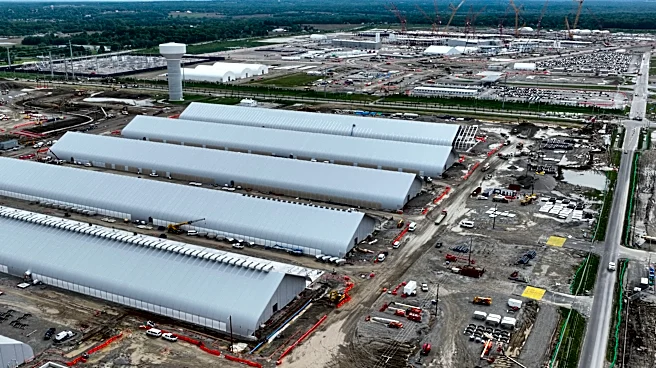
Meta's proposed $27 billion Hyperion data center in Richland Parish, Louisiana, is generating both economic optimism and public concern. The project is expected to create a significant number of blue-collar
jobs, including roles for electricians, technicians, and security personnel, which cannot be offshored or conducted remotely. However, the data center's substantial water and electricity consumption has raised environmental concerns and fears of increased utility rates for local residents. The Louisiana Public Service Commission is currently deliberating on Entergy's proposal to construct new natural gas power plants to support the data center's energy demands. This expansion has met with opposition from community members who are worried about potential environmental degradation and the financial burden of higher energy bills. The debate highlights a growing national trend where the economic benefits of AI infrastructure development are being weighed against local environmental and financial impacts.
Why It's Important?
The Meta Hyperion project in Louisiana is a microcosm of a broader national discussion surrounding the rapid expansion of AI data centers. While these facilities promise job creation and economic growth, particularly in blue-collar sectors like construction, HVAC, and electrical trades, they also present significant challenges. The demand for skilled workers in these areas is increasing, with some technical professionals in data center roles seeing a pay premium. However, the immense energy and water requirements of these data centers are leading to public backlash and regulatory scrutiny across the U.S. Local communities are increasingly concerned about the strain on existing infrastructure, potential environmental impacts, and the possibility of higher utility costs. This tension between economic development and environmental sustainability is shaping policy decisions and public sentiment regarding the future of AI infrastructure in the United States.
What's Next?
The immediate next step involves the Louisiana Public Service Commission's final decision on Entergy's proposal to build new natural gas power plants to power Meta's Hyperion data center. This decision will significantly influence the project's trajectory and its environmental footprint. Should the proposal be approved, construction of the power plants would commence, followed by the data center itself, creating a surge in demand for skilled trades. Conversely, a rejection could force Meta and Entergy to explore alternative energy solutions or potentially delay the project. Beyond Louisiana, the growing public opposition to data centers, as evidenced by polls showing significant local opposition, suggests that more states and localities may implement moratoriums or stricter regulations. This could lead to a slowdown in data center development in some regions, potentially impacting the projected job growth in blue-collar sectors and prompting companies to seek locations with more favorable regulatory and public environments.
Beyond the Headlines
The Meta Hyperion project in Louisiana underscores a critical ethical and societal dilemma: how to balance technological advancement and economic opportunity with environmental stewardship and community well-being. The promise of high-paying blue-collar jobs in the AI sector is undeniable, offering new pathways for workers without advanced degrees. However, the environmental cost, particularly the increased reliance on natural gas power plants and significant water consumption, raises questions about the long-term sustainability of this growth. This situation also highlights a potential shift in the American workforce, where the demand for skilled trades is being revitalized by the infrastructure needs of the digital economy. The backlash against data centers, even in areas benefiting from job creation, suggests a growing public awareness and demand for more transparent and environmentally responsible development practices from tech giants. This could lead to a re-evaluation of tax incentives offered to data centers and a greater emphasis on renewable energy solutions for these facilities.