




What's Happening?
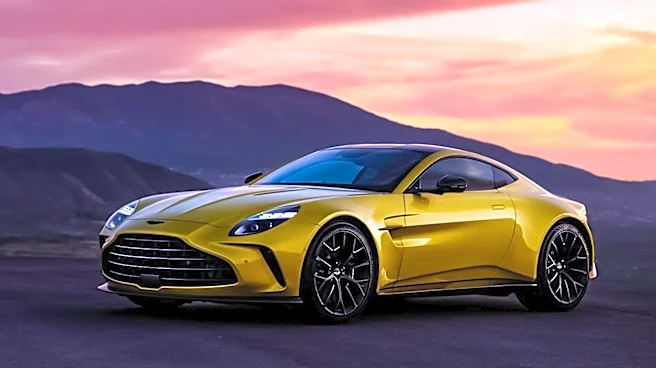
Aston Martin has significantly revised its car prices across its India portfolio, with reductions reaching up to Rs. 4.02 crore. This move follows the implementation of the India-UK Free Trade Agreement (FTA). The price adjustments apply to seven models,
including the Vanquish, DB12 S, Vantage S, and DBX S, making these British luxury vehicles considerably more affordable in the Indian market. The most substantial price cut is seen in the Vanquish Volante, which dropped from Rs. 10.92 crore to Rs. 6.90 crore. Similarly, the Vanquish Coupe's price was reduced from Rs. 10.11 crore to Rs. 6.40 crore. The DB12 S Coupe and Volante also saw reductions of over Rs. 2.5 crore, while the Vantage S models became cheaper by Rs. 1.84 crore and Rs. 1.91 crore, respectively. The DBX S SUV also benefited from a Rs. 2.65 crore price cut.
Why It's Important?
This significant price reduction by Aston Martin in India is a direct consequence of the India-UK Free Trade Agreement, demonstrating the immediate impact of trade policies on consumer markets. For the Indian luxury car market, this makes Aston Martin models more competitive against other high-end brands, potentially increasing sales volume and market share for the British automaker. The move could also stimulate demand within the ultra-luxury segment, attracting new buyers who previously found these vehicles prohibitively expensive. For the broader automotive industry, it highlights how FTAs can reshape pricing strategies and market dynamics, benefiting consumers through lower import duties and increased accessibility to international brands. This development could also encourage other luxury car manufacturers to re-evaluate their pricing structures in India, especially those from countries with similar trade agreements.
What's Next?
The revised pricing is expected to make Aston Martin more competitive in India's high-performance luxury car and SUV segments. The extent of the benefit will depend on the specific provisions and implementation of the India-UK Free Trade Agreement. This could lead to increased sales for Aston Martin in India and potentially influence other luxury car brands to adjust their pricing strategies in response to the new trade environment. The success of this pricing strategy could also serve as a case study for the impact of FTAs on luxury goods markets globally, potentially encouraging more such agreements. Future developments will likely involve monitoring sales figures and market reception to assess the long-term effectiveness of these price reductions.
Beyond the Headlines
Beyond the immediate financial implications, these price cuts reflect a strategic effort by Aston Martin to deepen its penetration into the Indian luxury market, which is rapidly growing. The India-UK FTA not only reduces import duties but also symbolizes strengthening economic ties between the two nations, potentially paving the way for further business collaborations and investments. For consumers, this means greater access to global luxury brands, fostering a more diverse and competitive market. However, it also raises questions about the sustainability of such aggressive pricing strategies and their potential impact on the perceived exclusivity of ultra-luxury brands. The long-term success will depend on Aston Martin's ability to maintain its brand allure while expanding its customer base through more accessible pricing.