

What's Happening?
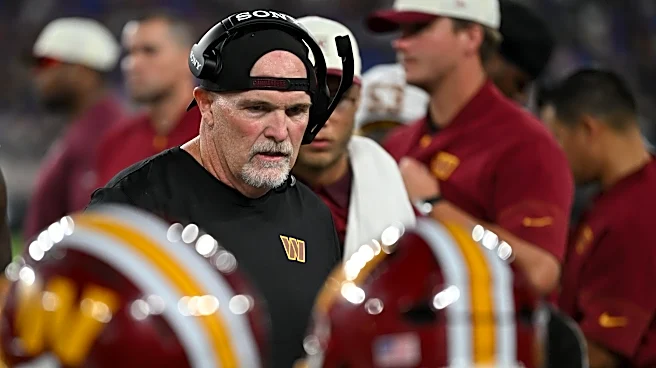
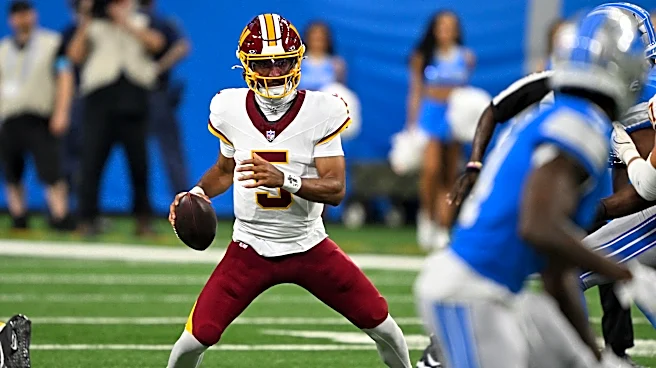
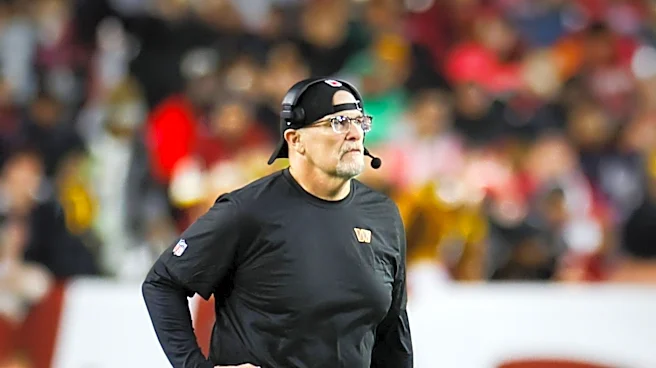
The Washington Commanders, under Head Coach Dan Quinn, have intentionally brought back the huddle for their offensive plays, a significant shift from the no-huddle approach used in previous seasons. This strategic change is designed to give quarterback
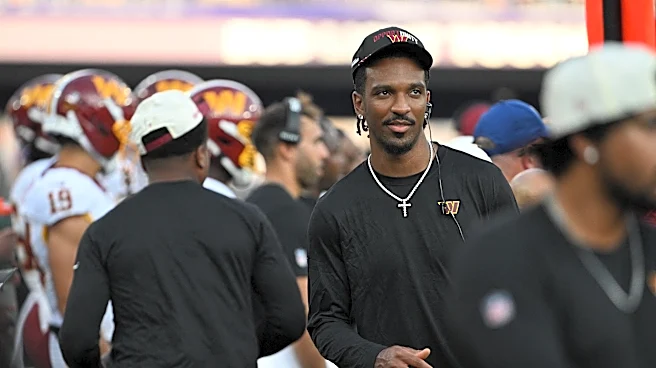
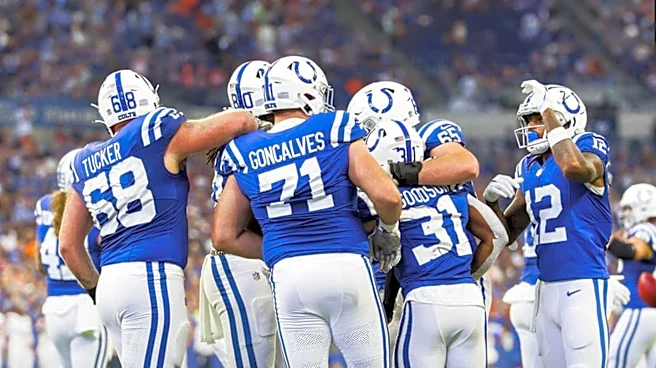
Jayden Daniels greater control over the offense before the snap. Coach Quinn emphasized that this is not merely a cosmetic adjustment but a deliberate move to enhance Daniels' communication with his teammates, ensuring everyone understands protections and assignments. The huddle allows Daniels to convey plays directly to the entire offense, reducing reliance on sideline signals and enabling him to react more effectively to defensive alignments. This move is part of a broader effort to empower Daniels and integrate him more deeply into the offensive decision-making process, providing him with additional tools to manage game flow and tempo. Offensive Coordinator David Blough views Daniels' clear communication as a valuable asset, highlighting the importance of direct interaction within the huddle for quick adjustments and cohesive play execution.
Why It's Important?
This strategic shift by the Washington Commanders holds significant implications for the team's performance and the development of quarterback Jayden Daniels. By reintroducing the huddle, the coaching staff is entrusting Daniels with more on-field responsibility, which could accelerate his growth as a leader and play-caller. This increased autonomy allows Daniels to make real-time adjustments and communicate directly with his teammates, fostering a stronger sense of unity and understanding within the offensive unit. For the team, having the flexibility to alternate between huddle and no-huddle offenses makes them less predictable to opposing defenses, forcing opponents to prepare for multiple offensive tempos and communication styles. This adaptability could lead to more efficient play execution and better game management. Furthermore, a more confident and empowered quarterback can elevate the performance of the entire offense, potentially improving scoring efficiency and overall team success. The success of this strategy will be crucial for the Commanders as they aim to build a competitive team around their young quarterback.
What's Next?
The Washington Commanders will continue to integrate the huddle into their offensive scheme, with a focus on maximizing Jayden Daniels' control and communication. The team is expected to refine the balance between huddle and no-huddle approaches, utilizing each strategy based on game situations and opponent tendencies. The coaching staff will closely monitor Daniels' performance and leadership in this new system, providing support and adjustments as needed. The effectiveness of this change will be evident in how Daniels manages the offense under pressure and how seamlessly the team executes plays. Stakeholders, including fans and analysts, will be watching to see if this intentional shift translates into improved offensive efficiency and more consistent performance on the field. The team's ability to adapt and leverage Daniels' enhanced role will be a key factor in their upcoming season, particularly as they face tough divisional opponents.
Beyond the Headlines
The decision to reintroduce the huddle for the Washington Commanders extends beyond mere tactical adjustments; it reflects a deeper philosophical commitment to quarterback development and team dynamics. In an era where no-huddle offenses are prevalent, returning to the huddle emphasizes the value of direct, in-person communication and the quarterback's central role as an on-field leader. This approach can foster a stronger sense of camaraderie and trust among players, as they rely more on each other's immediate input rather than solely on sideline signals. Ethically, it underscores a belief in empowering individual players with greater responsibility, potentially boosting morale and ownership within the team. Culturally, it might signal a return to more traditional football values, prioritizing fundamental communication and strategic deliberation over speed and surprise. This shift could also influence how other teams approach quarterback development, potentially leading to a re-evaluation of the balance between fast-paced, no-huddle schemes and more deliberate, huddle-based strategies in the NFL.