






What's Happening?
Ron Rezek, an American industrial designer born in 1946, is being recognized for his significant contributions to transforming various product categories through geometric clarity, mechanical efficiency, and economical production methods. Emerging from
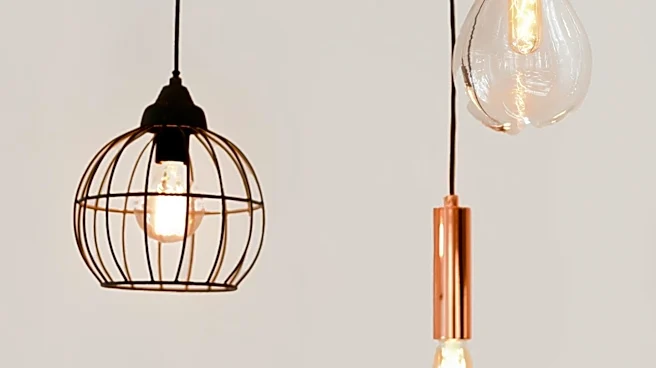
UCLA's experimental design culture, Rezek's career demonstrates how industrial design can enhance both the performance and appearance of products. He is particularly noted for establishing the ceiling fan as a legitimate object of contemporary design with his 1988 Stratos model, which removed visual and mechanical clutter. His work also includes a durable polyethylene rescue can for lifeguards and the establishment of Ron Rezek Lighting, providing modern fixtures for American interiors. Rezek's approach consistently integrated engineering, manufacturing, and visual refinement into a single design process.
Why It's Important?
Rezek's work is important for American industrial design as it exemplifies a tradition where creative control extends from concept to production and distribution. His entrepreneurial spirit, establishing companies like Ron Rezek Lighting and The Modern Fan Company, allowed him to address neglected product categories and bring innovative objects to market. By focusing on simplicity, usefulness, and production economy, Rezek influenced how everyday objects are perceived and designed, moving them from mere functionality to integrated elements of contemporary interiors. This approach has had a lasting impact on U.S. manufacturing and consumer product aesthetics, demonstrating that thoughtful design can elevate common items and create new market segments, benefiting both consumers and industries.
What's Next?
Rezek's legacy continues to influence contemporary industrial design, particularly in the emphasis on integrating form, technology, and human need. The principles he championed—form follows use, economy in production, geometric clarity, and the integration of engineering and appearance—remain foundational in design education and practice. His work with The Modern Fan Company, which aims to produce designs relevant beyond short-lived fashions, suggests a continued focus on timeless and functional design. Future developments in industrial design are likely to build upon these principles, seeking to create products that are not only innovative but also sustainable, user-friendly, and aesthetically enduring, reflecting a continued evolution of American design philosophy.
Beyond the Headlines
Beyond the immediate impact on product design, Rezek's career highlights the broader cultural significance of industrial design in shaping daily life. His ability to transform utilitarian objects like rescue cans and ceiling fans into well-designed, aesthetically pleasing items speaks to the power of design to improve human experience. This approach challenges the notion that design is merely superficial, instead positioning it as a critical discipline that solves practical problems while enhancing visual environments. His influence extends to design education, where he taught at institutions like UCLA and ArtCenter College of Design, shaping future generations of designers who continue to integrate technical problem-solving with a recognizable visual language, contributing to the ongoing evolution of American modernism.