


What's Happening?
J.R.R. Tolkien's 'The Hobbit' and 'The Lord of the Rings' are set in the same world of Middle-earth but differ significantly in their target audience, length, and tone. 'The Hobbit,' published in 1937, is a single adventure story written for children,
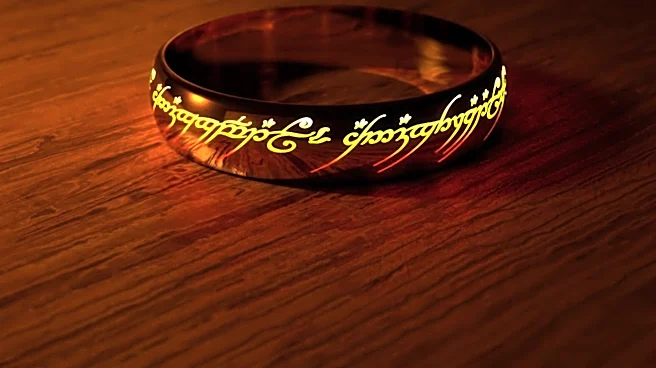
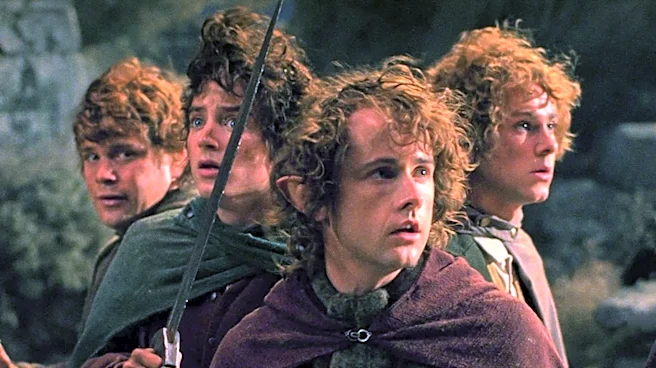
focusing on Bilbo Baggins' journey with thirteen dwarves to reclaim treasure from the dragon Smaug. It has a lighter tone and a more direct narrative style, often with the narrator addressing the reader. In contrast, 'The Lord of the Rings,' which began with 'The Fellowship of the Ring' in 1954, is a longer, three-volume epic intended for an older audience. It tells a more serious story of war, loss, and danger, following Bilbo's nephew Frodo as he undertakes a perilous quest to destroy a dangerous ring. 'The Hobbit' is generally recommended for readers aged 8+, while 'The Fellowship of the Ring' is suggested for ages 11-12+.
Why It's Important?
Understanding the differences between 'The Hobbit' and 'The Lord of the Rings' is crucial for educators, parents, and readers in the U.S. and globally, as it guides the introduction of children to classic fantasy literature. 'The Hobbit' serves as an accessible entry point into Tolkien's world, fostering a love for reading and imaginative storytelling from a younger age. Its lighter themes and simpler narrative make it suitable for developing readers. 'The Lord of the Rings,' with its complex themes, extensive world-building, and mature content, offers a more profound literary experience for older readers. This distinction impacts publishing strategies, educational curricula, and the marketing of adaptations, ensuring that each work reaches its intended audience effectively. The success of both series has also significantly influenced the fantasy genre, inspiring countless authors and shaping reader expectations.
What's Next?
The enduring popularity of both 'The Hobbit' and 'The Lord of the Rings' ensures their continued presence in literature and media. Publishers will likely continue to release new editions, and adaptations in film, television, and gaming will persist. The ongoing discussion about which book to read first will remain relevant for new generations of readers. Educational institutions will continue to use these works to teach literary analysis, mythology, and storytelling. The distinct characteristics of each book mean they will continue to be appreciated for their individual merits while also being recognized as foundational texts within the broader Middle-earth saga, influencing future creative endeavors and academic studies.
Beyond the Headlines
The contrasting styles and target audiences of 'The Hobbit' and 'The Lord of the Rings' offer a fascinating case study in an author's evolving relationship with their created world and readership. Tolkien initially wrote 'The Hobbit' as a children's story, but the demand for more led to the darker, more complex 'Lord of the Rings,' which explored deeper mythological and philosophical themes. This evolution reflects how literary works can grow beyond their initial scope, influencing cultural perceptions of fantasy as a genre capable of both lighthearted adventure and profound epic. It also highlights the power of a well-constructed fictional universe to sustain multiple narratives and appeal to diverse age groups, demonstrating the lasting impact of a singular creative vision on global culture and literature.