




What's Happening?
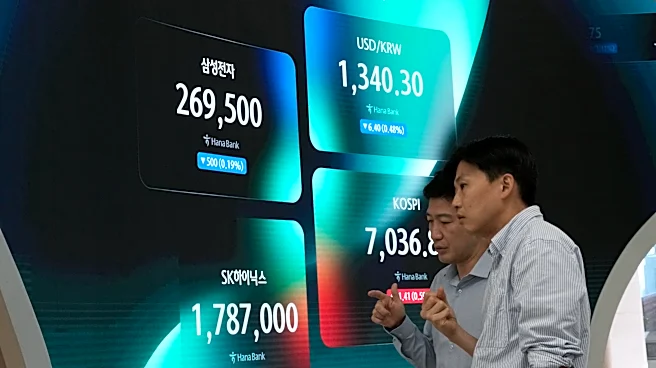
Samsung Electronics Co. is expected to conduct an equity buyback, with market watchers anticipating the company will primarily target its non-voting preferred shares. This move is seen as a strategy to narrow the significant discount at which these shares trade
compared to common stock. Over 100 South Korean companies, including Hyundai Motor Co. and LG Chem Ltd., have issued preferred shares to raise capital without diluting the voting power of founding families. These preferred shares typically offer a small dividend premium but trade at an average discount of 45%, a situation identified as a 'Korea discount' reflecting equity market undervaluation. Samsung's potential focus on preferred shares in its buyback could save the company money and help it navigate a rule that might otherwise compel its affiliates to sell down their holdings. The spread between Samsung's preferred and common stock is currently at its widest in over a decade, despite some recent narrowing due to buyback expectations.
Why It's Important?
This development is significant for the South Korean financial market and could set a precedent for corporate governance reforms aimed at eliminating the 'Korea discount.' The undervaluation of preferred shares has been a long-standing issue, symbolizing capital misallocation. By targeting these discounted shares, Samsung could not only improve its own financial efficiency but also encourage other companies to address similar valuation gaps. This could lead to a broader re-evaluation of preferred stock in the market, potentially benefiting investors who hold these shares. The initiative aligns with Seoul's broader efforts to advance governance reform, which seeks to enhance shareholder value and attract more foreign investment by making the market more transparent and equitable. The success of Samsung's buyback strategy could therefore have a ripple effect across the South Korean corporate landscape, influencing how companies manage their capital and engage with shareholders.
What's Next?
Samsung Electronics announced last month its intention to spend up to 110 trillion won ($81.8 billion) on shareholder-return programs, one of the largest globally, though it did not specify the exact amount for buybacks. The market will be closely watching for details on how much of this will be allocated to preferred shares. If Samsung proceeds with a significant buyback of preferred stock, it could further narrow the valuation gap, potentially influencing other major South Korean companies like Hyundai Motor, which also announced a preferred share buyback program in August. The outcome of these buybacks will be a key indicator of the effectiveness of governance reforms in South Korea and could determine whether the 'Korea discount' truly begins to diminish. Investors and market analysts will be monitoring the impact on share prices and overall market sentiment, as well as any subsequent policy changes or corporate actions inspired by Samsung's approach.
Beyond the Headlines
The practice of issuing preferred shares at a significant discount, while providing capital without diluting family control, raises deeper questions about corporate governance and shareholder rights in South Korea. The 'Korea discount' is not merely a financial anomaly but reflects a broader perception of corporate structures that may prioritize founding families over minority shareholders. Samsung's potential buyback of preferred shares, if successful in narrowing the discount, could signal a shift towards more equitable treatment of all shareholders. This move could foster greater trust in the South Korean market, potentially attracting more international investment and improving the country's global financial standing. It also highlights the growing influence of investor activism and the pressure on large conglomerates to adopt more transparent and shareholder-friendly practices. The long-term implications could include a re-evaluation of traditional corporate structures and a push for more robust governance frameworks across the region.