





What's Happening?
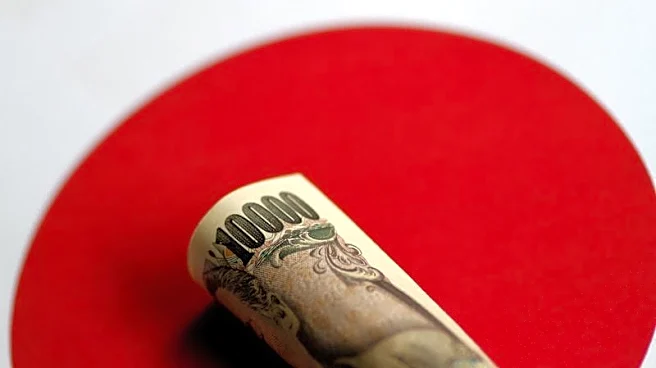
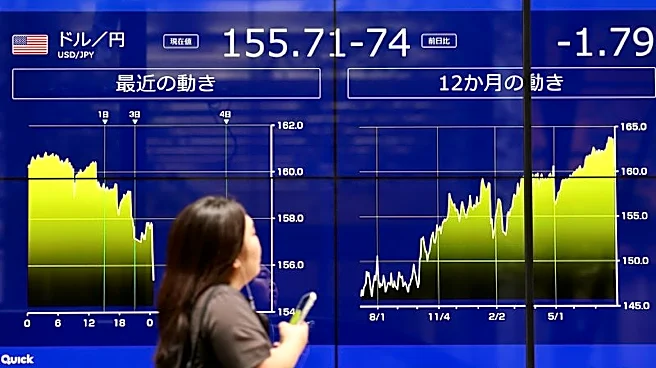
US Treasury Secretary Scott Bessent and Japan's Ministry of Finance have confirmed a coordinated foreign exchange intervention aimed at stabilizing the yen. This joint action, conducted on a recent Friday, was designed to counteract disorderly movements
in the yen, which has been experiencing significant depreciation. Both the US and Japan have pledged to continue such interventions if necessary. Bessent emphasized the success of these actions in addressing the yen's undervaluation and expressed strong support for Japan's monetary policies. He also highlighted the Federal Reserve's FIMA repo facility as a crucial backstop and suggested its expansion in the coming months. Japan's Ministry of Finance echoed this sentiment, confirming their commitment to further interventions if required.
Why It's Important?
The intervention is significant as it represents a rare instance of coordinated action between the US and Japan to stabilize a major currency. The yen's depreciation has been a concern due to its impact on Japan's economy, which relies heavily on imports. A weaker yen increases the cost of these imports, exacerbating inflationary pressures. For the US, the intervention helps maintain economic stability and prevents excessive selling of US government bonds by Japan, which could increase borrowing costs for the US government. This move underscores the interconnectedness of global economies and the importance of international cooperation in addressing currency volatility.
What's Next?
Future actions will likely depend on the yen's performance and the effectiveness of Japan's monetary policies. The Bank of Japan may consider interest rate adjustments to further support the yen. Additionally, the US Treasury and Japan's Ministry of Finance will continue to monitor the situation closely, ready to intervene again if necessary. The expansion of the FIMA repo facility could provide a more permanent solution to currency stabilization, reducing the need for frequent interventions.