







What's Happening?
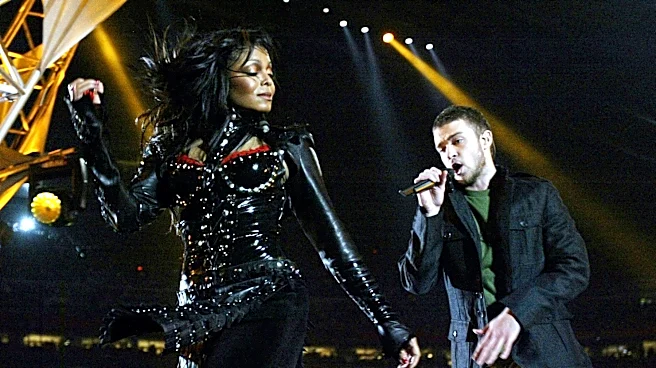
Wayne Scot Lukas, Janet Jackson's former stylist and designer, has claimed that the infamous 'wardrobe malfunction' during the 2004 Super Bowl halftime show was a planned event. Speaking to TMZ Sports, Lukas stated that the incident, which involved Justin
Timberlake exposing Jackson's breast, was not an accident but rather a deliberate act. He clarified that the term 'wardrobe malfunction' was coined by Timberlake, which Lukas felt unfairly placed blame on him. Lukas asserted that the outfit was designed to function exactly as intended, suggesting that the public's understanding of the event is incorrect. He also mentioned that the original plan for the exposure changed just two days before the performance, shifting from Jackson's derrière to her breast. Lukas indicated that the intention was to create a moment that would surpass the scandalous VMAs kiss involving Britney Spears, Christina Aguilera, and Madonna.
Why It's Important?
This revelation from Janet Jackson's former designer reopens a significant chapter in pop culture history, potentially altering the narrative surrounding one of the most controversial live television moments. The 2004 Super Bowl incident led to widespread public outcry, significant changes in broadcast regulations, and a perceived blacklisting of Janet Jackson from the entertainment industry. If Lukas's claims are accurate, it could shift public perception regarding accountability and intent behind the event. It also raises questions about the media's portrayal of such incidents and the long-term career impacts on those involved. The designer's statement could influence how future pop culture controversies are viewed, particularly those involving high-profile performances and perceived 'accidents.'
What's Next?
The claims made by Wayne Scot Lukas could prompt renewed discussions and investigations into the 2004 Super Bowl halftime show. With Justin Timberlake reportedly involved in an Apple TV docuseries that will revisit the event, Lukas's statements may add a new dimension to the narrative presented in the series. It remains to be seen if Timberlake or Janet Jackson will publicly respond to these specific allegations. The entertainment industry and media outlets may re-examine their past coverage and interpretations of the incident. This could also lead to further revelations from other individuals involved in the 2004 Super Bowl production, potentially shedding more light on the planning and execution of the halftime show.
Beyond the Headlines
Lukas's assertion that the 'malfunction' was planned, but the production went awry because MTV producers failed to cut to black as intended, introduces a new layer of complexity. He suggests that the true 'malfunction' was the failure to protect Jackson by not cutting away, leading to her exposure on live television. This perspective highlights the ethical responsibilities of broadcast producers in managing live events and protecting performers. It also touches upon the broader cultural implications of such incidents, including the disproportionate impact on female artists and the swift public condemnation they often face. The designer's desire for the truth to be known, even without an apology, underscores the lasting personal and professional repercussions of the event.