





What's Happening?
The U.S. government is significantly increasing its support for the domestic rare earth industry, with approximately $3.5 billion in potential federal funding earmarked or finalized this year. This initiative aims to establish rare earth supply chains
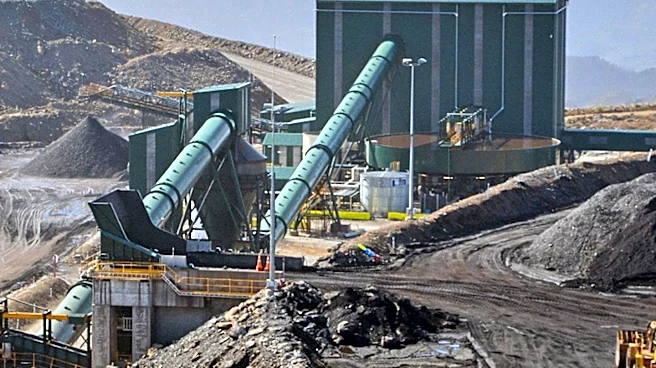
independent of China, which currently dominates the global market. Recent developments include the Export-Import Bank of the U.S. (EXIM) expressing interest in providing up to $750 million for Aclara Resources’ Project Dynamo, a rare earths processing plant planned for Louisiana. Additionally, the Office of Strategic Capital (OSC) announced a $725 million conditional loan for Energy Fuels to expand rare earth separation at its White Mesa mill in Utah and build downstream facilities. Private refiner Phoenix Tailings also received a conditional $500 million loan from the OSC for rare earth midstream processing in Massachusetts and New Hampshire. Furthermore, USA Rare Earth secured nearly $1.6 billion in funding through definitive agreements with the Department of Commerce under a CHIPS Act-backed initiative.
Why It's Important?
This substantial federal investment underscores a critical strategic shift by the U.S. to secure its supply of rare earth elements, which are essential for national defense, artificial intelligence data centers, and various modern technologies. The current reliance on China for these critical minerals poses significant economic and national security vulnerabilities. By fostering domestic processing and production capabilities, the U.S. aims to mitigate these risks, enhance its industrial independence, and ensure a stable supply for key sectors. The funding targets various stages of the supply chain, from mining and separation to metals and alloys production, indicating a comprehensive approach to building a robust, end-to-end domestic rare earth ecosystem. This move is vital for maintaining technological leadership and reducing geopolitical leverage held by foreign adversaries.
What's Next?
Aclara Resources anticipates providing necessary documentation to EXIM in the first or second quarter of 2027, with site preparation for Project Dynamo potentially beginning concurrently. Commissioning and initial production for the Louisiana plant are projected for the second half of 2028. Aclara also plans to publish a feasibility study for its Penco mine in Chile by the end of this year, with production potentially starting in 2027. These timelines suggest a phased approach to establishing a fully integrated rare earth supply chain. The continued allocation of federal funds and the progress of these projects will be closely monitored as indicators of the U.S.'s success in reducing its dependence on foreign rare earth sources and strengthening its critical mineral infrastructure.
Beyond the Headlines
The aggressive push by the U.S. government to localize the rare earth supply chain extends beyond immediate economic benefits, touching upon long-term geopolitical and environmental considerations. Establishing domestic processing capabilities could lead to the development of new technologies and expertise in rare earth extraction and refining, potentially creating high-skilled jobs and fostering innovation. However, it also raises questions about the environmental impact of mining and processing these materials within U.S. borders, necessitating stringent regulatory oversight. This strategic pivot could also influence international trade relations, as the U.S. seeks to build alliances with other nations to diversify supply sources and reduce the market dominance of any single country. The success of these initiatives will be a testament to the U.S.'s ability to balance economic competitiveness, national security, and environmental stewardship.