


What's Happening?
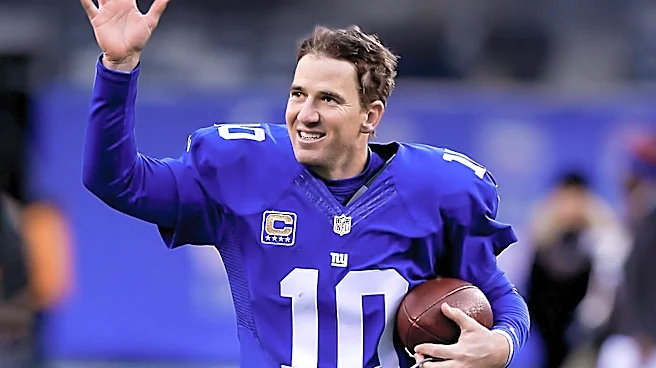
Former NFL quarterback Drew Brees has publicly stated his belief that Eli Manning deserves a spot in the Pro Football Hall of Fame. Brees, who was recently inducted himself, highlighted Manning's career accomplishments, including two Super Bowl victories
with the New York Giants. Despite Manning's impressive resume, which places him among the all-time passing leaders, he has not yet received enough votes for induction, missing the modern-era finalists list for the past two voting periods. Brees emphasized that evaluating quarterbacks involves considering their body of work, consistency, and championships, all of which Manning possesses. He also noted the competitive era of quarterbacks they played in, which included Peyton Manning, Tom Brady, Philip Rivers, Ben Roethlisberger, and Aaron Rodgers, suggesting that this competition brought out the best in each player.
Why It's Important?
The debate surrounding Eli Manning's Hall of Fame candidacy reflects broader discussions within the sports community about the criteria for induction into prestigious halls of fame. Brees's endorsement, coming from a contemporary and fellow Hall of Famer, adds significant weight to Manning's case. This discussion is important for fans and analysts as it shapes the historical narrative of the sport and recognizes the careers of its most impactful figures. The differing opinions on Manning's legacy—balancing his two Super Bowl wins against a regular-season record of .500 and a lack of individual accolades like First-Team All-Pro selections or MVP votes—underscore the complexity of evaluating a player's overall contribution. The outcome of this debate will influence how future generations of players are assessed for their place in football history.
What's Next?
Eli Manning's eligibility for the Pro Football Hall of Fame will continue to be a topic of discussion among voters and the public in upcoming voting cycles. While Brees's support provides a strong argument, the Hall of Fame selection committee will ultimately decide if Manning's career merits induction. The ongoing debate will likely involve further analysis of his statistics, his performance in critical moments, and his impact on the New York Giants franchise. Future voting periods will reveal whether the sentiment among voters shifts in favor of his induction, potentially influenced by continued advocacy from peers like Brees and a re-evaluation of his overall career trajectory and achievements.
Beyond the Headlines
The discussion around Eli Manning's Hall of Fame credentials extends beyond mere statistics, touching upon the subjective nature of greatness in sports. It highlights the tension between individual performance metrics and team success, particularly in a team-centric sport like football. Manning's career, characterized by clutch playoff performances against dominant teams like the New England Patriots, exemplifies how moments of extraordinary achievement can sometimes overshadow statistical inconsistencies. This debate also reflects the evolving standards for Hall of Fame induction, where factors like durability (Manning played 210 consecutive regular-season games) and leadership are weighed alongside traditional measures of success. The eventual decision will not only honor a player but also subtly redefine what it means to be considered among the all-time greats in professional football.