





What's Happening?
Marvell Technology (NasdaqGS:MRVL) has announced the formation of a new Open Compute Project (OCP) working group focused on defining server-level silicon security standards, in collaboration with Microsoft and Oracle. This development follows Marvell's
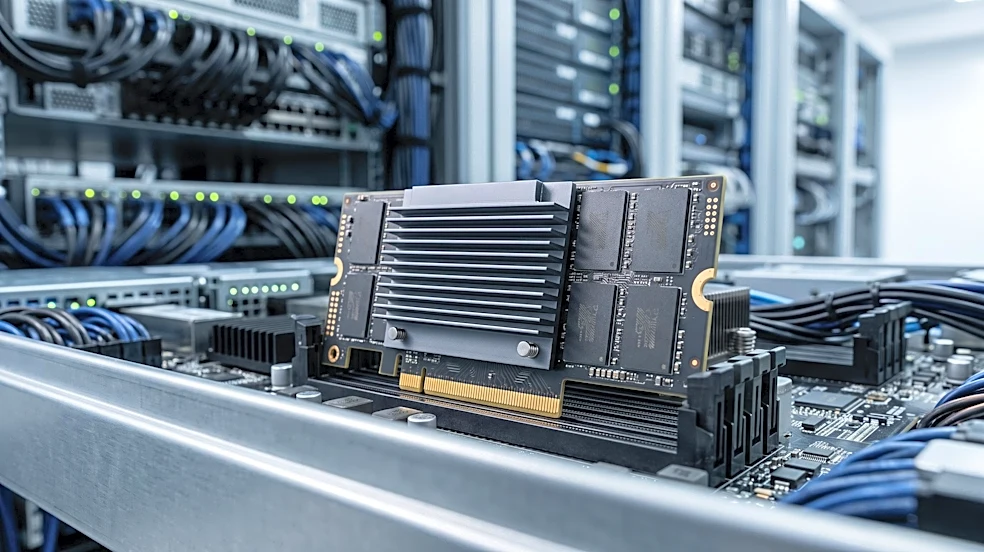
recent introduction of six channel CXL memory expander products designed for AI and cloud data center workloads. Additionally, the company launched new high-speed copper connectivity solutions, including Alaska E 3.2T and Alaska A 1.6T DSP devices, aimed at enhancing data center links. Marvell Technology specializes in semiconductor hardware that connects data center cores to network edges across various regions. These new memory and connectivity offerings are designed to integrate directly into existing systems used by large cloud providers and AI operators for data processing and movement at scale.
Why It's Important?
Marvell Technology's strategic moves are significant for the AI and cloud data center industries. The introduction of CXL memory expanders addresses critical memory constraints in AI workloads, enabling more efficient processing of large datasets. The new high-speed copper connectivity solutions are vital for maintaining rapid data flow within increasingly complex data centers. Furthermore, the formation of the OCP working group for server-level silicon security standards is a crucial step towards establishing a more secure foundation for cloud infrastructure. As AI and cloud computing become more pervasive, the integrity and security of the underlying hardware are paramount. This initiative, involving major industry players like Microsoft and Oracle, aims to standardize security protocols, which can lead to more robust and trustworthy cloud environments, benefiting businesses and consumers reliant on these services.
What's Next?
Investors and industry observers will be closely watching for execution proof points from Marvell Technology. This includes announcements of design wins and sampling updates for their new Structera X CXL memory expanders and Alaska E/A connectivity devices. Concrete commentary on the progress of the OCP security specification at upcoming OCP events and quarterly calls through 2027 will also be key. Management's ability to tie these new products and initiatives to their guided FY27 and FY28 AI-focused revenue trajectory (US$12 billion and US$18 billion, respectively) will be critical for market confidence. The collaboration with Microsoft and Oracle in defining security standards could also lead to broader industry adoption of these new protocols, potentially influencing future data center design and security practices across the sector.
Beyond the Headlines
The convergence of advanced memory solutions, high-speed connectivity, and robust security standards, as championed by Marvell Technology, signals a fundamental shift in how AI and cloud infrastructure are being built and secured. Beyond the immediate performance gains, the emphasis on server-level silicon security addresses a growing concern about hardware-level vulnerabilities that could undermine the entire digital ecosystem. By establishing open standards through the OCP, the industry is moving towards a more collaborative and transparent approach to security, which can foster greater trust and resilience. This proactive stance on security at the foundational hardware level is essential for the long-term growth and stability of AI and cloud computing, potentially mitigating future cyber threats and ensuring the integrity of critical data processing operations across global networks.