




What's Happening?
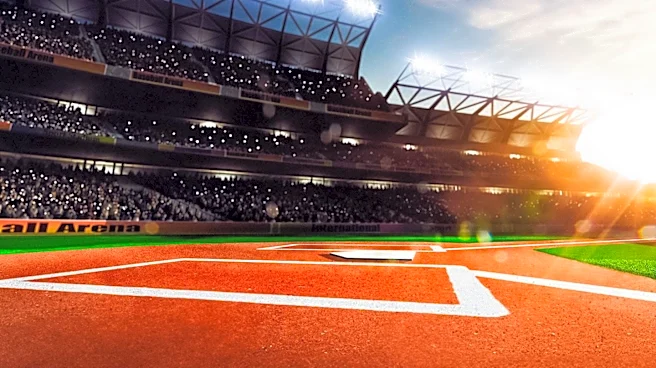
Major League Baseball (MLB) owners have unanimously approved the sale of the San Diego Padres to José E. Feliciano and Kwanza Jones for a record-breaking $3.9 billion. This transaction marks the most expensive deal in baseball history, surpassing Steve
Cohen's $2.4 billion purchase of the Mets in 2020. The sale follows a period of uncertainty for the Padres after the death of former control person Peter Seidler. His longtime business associate, Eric Kutsenda, initially served as interim control person, and later Peter's brother, John Seidler, was approved by MLB as the control person in February 2025. However, internal disputes and legal issues within the Seidler family, including a lawsuit filed by Peter Seidler's widow, Sheel Seidler, against his brothers, led to the family exploring a sale. With these issues largely resolved by February 2026, the sale gained momentum, culminating in the approval of Feliciano and Jones as the new principal owners. They are expected to introduce themselves at a news conference on August 24.
Why It's Important?
This record-setting sale underscores the escalating valuations of professional sports franchises in the U.S., reflecting strong investor confidence in the long-term profitability and cultural significance of MLB teams. The $3.9 billion price tag sets a new benchmark for team acquisitions, potentially influencing future valuations across major sports leagues. For the San Diego Padres, the ownership change brings stability after a period of leadership uncertainty following Peter Seidler's death. Seidler had significantly increased the team's payroll and ambition, transforming them into a contender. The new owners, Feliciano and Jones, inherit a team that has made the playoffs four times in the last six years and is currently performing well, indicating a strong foundation for continued success. Their commitment to maintaining the team's competitive drive and investing in the community could further solidify the Padres' standing in San Diego and the league. The continuity of key personnel like A.J. Preller and Erik Greupner also suggests a smooth transition, minimizing disruption to baseball operations.
What's Next?
Following the MLB approval, José E. Feliciano and Kwanza Jones are scheduled to introduce themselves as the new principal owners of the San Diego Padres at a news conference on August 24. Feliciano will assume the role of the club's control person, while A.J. Preller will remain as president of baseball operations and Erik Greupner as CEO. The new ownership group has expressed a commitment to building on the foundation established by Peter Seidler, aiming to bring a World Series championship to San Diego. They have also emphasized community engagement and deepening the team's connection with its fanbase. The Padres' baseball operations are expected to continue without significant changes, as the team has already been active in the trade market, acquiring players like Casey Mize and Robbie Ray. Fans will be watching closely to see how the new ownership translates their stated ambitions into tangible actions, particularly regarding future player investments and team performance.
Beyond the Headlines
The sale of the San Diego Padres for an unprecedented $3.9 billion highlights a broader trend of increasing institutional investment in sports, often by high-net-worth individuals and investment groups. This trend raises questions about the evolving nature of sports ownership, moving from traditional local business figures to global financial players. The internal family disputes and legal battles over Peter Seidler's trusts underscore the complex financial and legal structures often involved in managing and transferring ownership of major sports franchises. The new owners' emphasis on community and belonging, alongside their business partnership, suggests a potential shift towards a more integrated approach to team management, combining financial acumen with a strong public relations strategy. This could set a precedent for how future sports ownership groups engage with their teams' cities and fan bases, moving beyond purely financial transactions to embrace a broader civic role. The high valuation also reflects the increasing media rights deals and global appeal of baseball, positioning MLB teams as valuable assets in the entertainment industry.