

What's Happening?
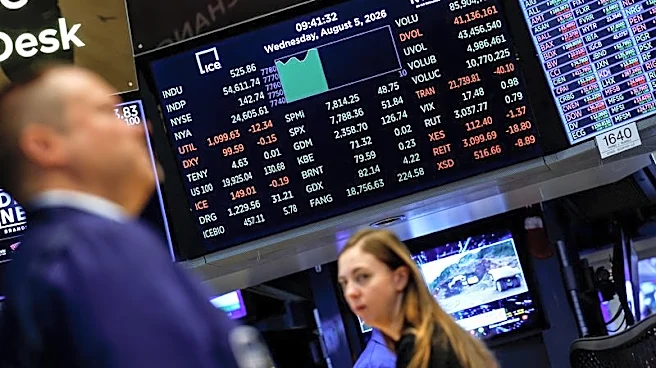
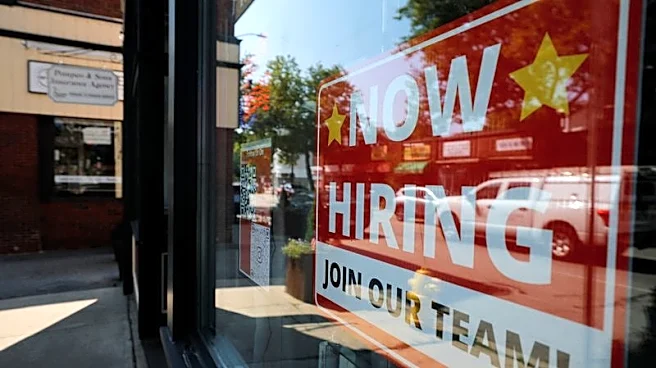
U.S. stocks have risen despite a disappointing July jobs report, which showed a loss of 23,000 payrolls, contrary to expectations of job growth. The report also revised downward job gains for the previous two months. Despite the weak labor market data,
investors are optimistic as it suggests the Federal Reserve may delay interest rate hikes. The probability of a rate hike by the end of the year has decreased, leading to a positive reaction in the stock market.
Why It's Important?
The stock market's reaction to the weak jobs report highlights the complex relationship between economic data and investor sentiment. While a weaker job market could signal economic challenges, it also reduces the likelihood of immediate interest rate hikes, which investors view as a potential headwind for stocks. This dynamic underscores the delicate balance the Federal Reserve must maintain between supporting economic growth and controlling inflation. The market's response also reflects broader concerns about the potential for a recession and the impact of geopolitical factors, such as the Iran war and tariffs, on the U.S. economy.
What's Next?
Investors will be closely monitoring upcoming economic data, including the July inflation report and GDP estimates, to assess the broader economic outlook. The Federal Reserve's future actions on interest rates will be influenced by these data points, as well as ongoing geopolitical developments. Market participants will also be watching for any signals from the Fed regarding its policy direction, as uncertainty remains a key factor influencing investor behavior. The interplay between economic data, Fed policy, and market sentiment will continue to shape the investment landscape in the coming months.