


What's Happening?
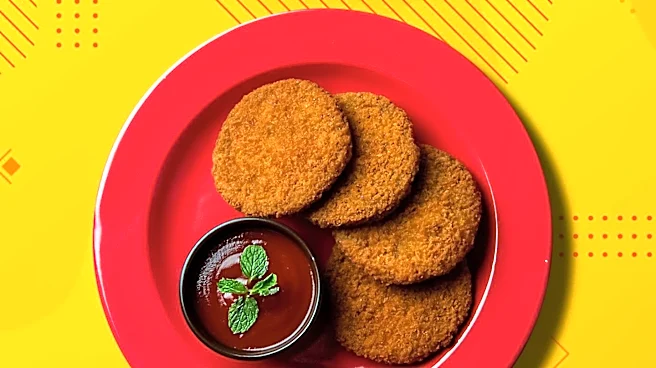
Pork rinds are being highlighted as an effective low-carb, high-protein substitute for traditional breadcrumbs in recipes like chicken cutlets. This alternative offers a hearty, rich crunch and can be used as a 1-to-1 replacement for breading in various
cooking methods, including oven-baking, air-frying, pan-frying, or deep-frying. Pork rinds, also known as chicharrónes, are made from pig skin with the fat removed, then dried and fried. They provide a significant protein boost compared to carb-heavy breadcrumbs. Natural pork rinds have a neutral flavor but add salt, which should be considered when seasoning. While store-bought options are available, making them at home allows for control over ingredients, avoiding added sugars and preservatives found in some pre-flavored varieties. The texture can be customized by grinding them to a desired coarseness, ensuring enough nooks and crannies for herbs and spices.
Why It's Important?
This culinary shift is significant for individuals following low-carb or ketogenic diets, offering a versatile ingredient that enhances flavor and texture without compromising dietary goals. The use of pork rinds provides a practical solution for making classic dishes like chicken cutlets more diet-friendly, expanding meal options for those managing carbohydrate intake. Beyond chicken, pork rinds can be incorporated into various dishes, from coating pork chops and fish to serving as a binder for burgers and meatballs, or even sprinkled over salads and roasted vegetables. This trend reflects a broader consumer interest in healthier, protein-rich alternatives in everyday cooking, potentially influencing food manufacturers to offer more low-carb breading options and inspiring home cooks to experiment with alternative ingredients.
What's Next?
The growing popularity of low-carb alternatives like pork rinds could lead to increased demand for such products in grocery stores, potentially prompting more food manufacturers to produce ready-to-use pork rind crumbs or other low-carb breading solutions. Culinary publications and food blogs may feature more recipes incorporating pork rinds, further normalizing their use in mainstream cooking. Additionally, as consumers become more aware of the versatility and benefits of pork rinds, there might be an uptick in interest in making them from scratch, leading to more educational content on preparation techniques. This trend could also inspire innovation in the snack food industry, with more companies exploring pork rind-based products as a healthier, protein-packed snack option.
Beyond the Headlines
The embrace of pork rinds as a breadcrumb substitute points to a deeper cultural shift in dietary habits and food perceptions. Once considered a less healthy snack, pork rinds are being re-evaluated through the lens of low-carb and keto diets, highlighting how nutritional science and dietary trends can transform the image and utility of food items. This re-evaluation also underscores a broader movement towards utilizing whole, less processed ingredients, even if they are unconventional. It challenges traditional notions of what constitutes 'healthy' eating, emphasizing macronutrient composition over historical dietary stigmas. This trend could also encourage a more adventurous approach to cooking, where home cooks are more willing to experiment with diverse ingredients to meet specific dietary needs or preferences.