



What's Happening?
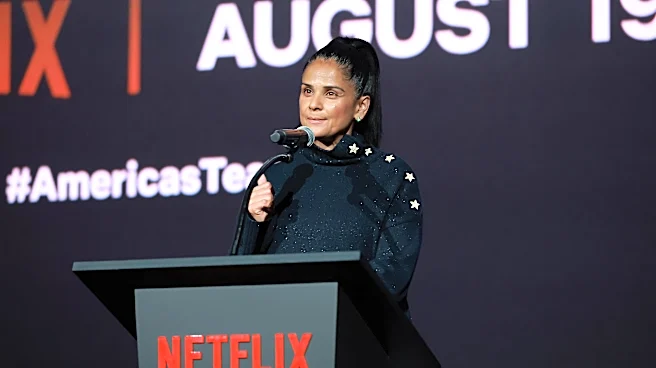
Author May Cobb has discussed the upcoming second season of 'The Hunting Wives,' which is set to premiere on Netflix on Thanksgiving Day. Cobb, who also serves as an executive producer for the series, expressed her excitement about the expansion of character
arcs for Margo and Sophie beyond the scope of her original novel. She praised creator, showrunner, and producer Rebecca Cutter for her adaptation work, noting the well-run set and the creation of a 'binge-worthy show.' Cobb drew inspiration for the novel from her East Texas hometown of Longview, highlighting its unique landscape and social dynamics, which differ from common perceptions of Texas. She also delved into her intention to subvert traditional narratives by allowing female characters to behave 'lawlessly' and 'wickedly,' a theme she explored with particular glee in the creation of characters like Margo.
Why It's Important?
The discussion around 'The Hunting Wives' and its portrayal of 'unlikeable' female characters is significant within the broader landscape of television and literature. It reflects a growing trend and audience appetite for complex, morally ambiguous female protagonists who defy traditional expectations of femininity. This approach challenges conventional storytelling tropes that often confine women to roles of virtue or victimhood, instead offering a more nuanced and realistic depiction of human behavior. For viewers, such narratives can be empowering, providing a space to explore themes of power, desire, and transgression without judgment. From a creative standpoint, it allows writers and showrunners to push boundaries, fostering more diverse and compelling storytelling that resonates with contemporary audiences seeking depth and authenticity in their entertainment. The success of shows like 'The Hunting Wives' can influence future content creation, encouraging more nuanced character development across the industry.
What's Next?
With the premiere of 'The Hunting Wives' Season 2 on Netflix, audiences will have the opportunity to see how the expanded character arcs and themes of female 'lawlessness' further develop. The reception of the new season will likely influence future decisions regarding the series, including potential renewals and the direction of subsequent storylines. The show's continued exploration of complex female characters could also contribute to ongoing conversations within the entertainment industry about representation and the types of stories being told. If successful, it may encourage other creators to invest in narratives that feature multifaceted women who challenge societal norms. Furthermore, May Cobb's insights into her creative process and inspirations could spark further interest in her literary works and influence aspiring authors to explore similar thematic territories.
Beyond the Headlines
The deliberate creation of 'unlikeable' female characters, as discussed by May Cobb, taps into deeper cultural conversations about gender roles and societal expectations. Historically, female characters in media have often been constrained by archetypes that demand likability, morality, or subservience. By allowing women to be 'lawless' and 'wicked,' 'The Hunting Wives' challenges these ingrained perceptions, reflecting a broader societal shift towards acknowledging the full spectrum of female experience, including ambition, aggression, and moral ambiguity. This subversion of traditional tropes can be seen as a form of feminist storytelling, empowering women to see themselves reflected in characters who are not always perfect but are undeniably human. It also encourages critical engagement with media, prompting audiences to question why certain behaviors are deemed acceptable for male characters but not for female ones, thereby contributing to a more equitable and representative media landscape.