

What's Happening?
Renowned director Martin Scorsese has announced a partnership with an AI firm, utilizing its text-to-image model for the storyboarding process of his next movie. This move signifies a notable adoption of artificial intelligence by a veteran filmmaker
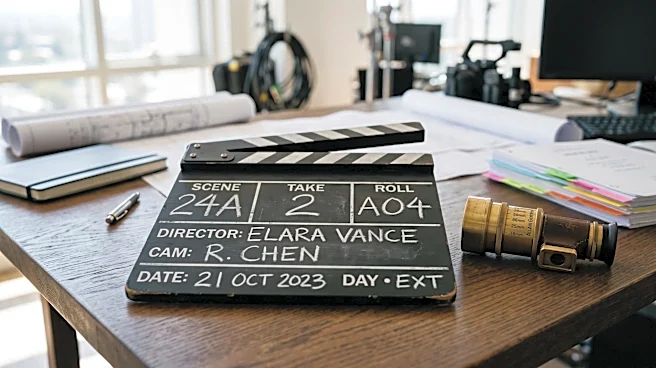
known for his traditional approach. Storyboarding, traditionally a collaborative effort between directors, artists, and various crew members, involves creating visual panels to map out scenes before filming. The integration of AI in this phase allows for the generation of illustrations from text prompts, potentially streamlining a crucial pre-production stage. Other prominent directors, including James Cameron and Steven Soderbergh, have also explored AI in their filmmaking processes, indicating a growing trend within the industry. This development highlights the increasing influence of AI on creative roles in Hollywood, particularly for tasks like visual pre-visualization.
Why It's Important?
Scorsese's embrace of AI for storyboarding is significant as it signals a broader shift in the film industry's approach to creative processes. The adoption of AI by a director of his stature could legitimize the technology for other filmmakers, potentially accelerating its integration across various production stages. This shift could impact the roles of traditional storyboard artists, as AI tools offer an alternative method for visual development. While some view AI as a tool to enhance efficiency and explore new visual possibilities, others express concerns about its potential to displace human artists and alter the collaborative nature of filmmaking. The move also raises questions about the future of creative jobs in Hollywood and the evolving skill sets required in a technology-driven industry. The efficiency gains from AI could also influence production timelines and budgets, potentially making film production more accessible or faster.
What's Next?
The partnership between Martin Scorsese and the AI firm is likely to spark further discussion and experimentation within the film industry regarding AI's role in creative workflows. Other studios and directors may observe the outcomes of Scorsese's use of AI in storyboarding to assess its effectiveness and potential benefits. This could lead to increased investment in AI tools for pre-production, visual effects, and even script development. Storyboard artists and other creative professionals may need to adapt by integrating AI tools into their own practices or by focusing on aspects of their craft that AI cannot replicate, such as nuanced artistic interpretation and collaborative problem-solving. The industry may also see the emergence of new roles focused on AI integration and oversight in filmmaking. Furthermore, discussions around intellectual property and ethical considerations related to AI-generated content are expected to intensify.
Beyond the Headlines
The integration of AI into a fundamental creative process like storyboarding by a director like Scorsese touches upon deeper implications concerning the nature of artistic creation and collaboration. It raises philosophical questions about authorship and the human element in art when machines contribute to the creative output. While AI can generate images rapidly, the nuanced understanding of narrative, emotion, and human interaction that a human storyboard artist brings might be difficult to fully replicate. This development could lead to a re-evaluation of what constitutes 'art' in the digital age and how human creativity can evolve alongside technological advancements. It also highlights the ongoing tension between efficiency driven by technology and the preservation of traditional artistic crafts, potentially fostering a hybrid approach where AI serves as a powerful assistant rather than a complete replacement for human ingenuity.