









What's Happening?
A global team of nutrition scientists, led by BYU nutritional science professor Karen Della Corte, has developed an International Food Guide Pyramid. This new guide synthesizes dietary recommendations from various countries, including Canada, Germany,
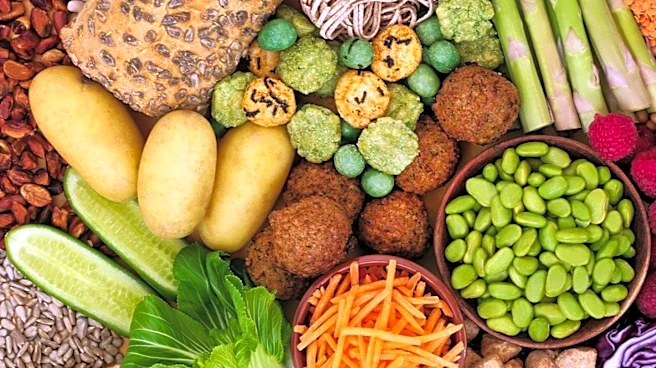
Australia, China, and Nordic nations, along with evidence from over 250 scientific publications and the EAT-Lancet Planetary Health Diet. Published in 'Advances in Nutrition,' the pyramid aims to provide a universally adaptable framework for healthy eating. Its core principles emphasize making plant foods the foundation of one's diet, choosing healthier sources of fat and protein, and prioritizing carbohydrate quality. The pyramid highlights vegetables, fruits, and whole, low-glycemic-index grains at its base, while recommending limitations on refined grains, processed meats, and sugary drinks. This initiative seeks to consolidate broad scientific agreement on healthy eating into a practical and culturally adaptable food guide.
Why It's Important?
This International Food Guide Pyramid is significant because it addresses the global challenge of diet-related diseases and environmental sustainability. The EAT-Lancet Commission suggests that adopting such a plant-forward diet could prevent approximately 15 million premature deaths annually and substantially reduce greenhouse gas emissions from livestock farming. By providing a unified, adaptable guide, it aims to simplify nutrition science for a global audience, promoting dietary patterns that benefit both human health and the planet. The emphasis on plant-based foods, healthier fats, and quality carbohydrates can help combat chronic non-communicable diseases, which are increasingly prevalent at younger ages. The guide's flexibility allows for adaptation to local foods and cultural preferences, making it a practical tool for diverse populations worldwide.
What's Next?
The developers of the International Food Guide Pyramid hope that this research will make nutrition science more accessible and understandable globally. The next steps involve promoting the adoption and integration of these guidelines into national dietary policies and public health campaigns. Efforts will likely focus on educating consumers, healthcare professionals, and policymakers about the pyramid's principles and its potential benefits. Additionally, there will be a need to encourage food environments that support these recommendations, such as policies on food marketing, access, and pricing, to make healthy choices easier and more affordable. Further research may also explore the long-term impact of widespread adoption of these guidelines on global health outcomes and environmental sustainability.
Beyond the Headlines
The development of this international food pyramid reflects a growing consensus in the scientific community about the interconnectedness of human health and planetary well-being. It moves beyond traditional dietary advice by explicitly linking food choices to environmental impact, highlighting the ethical dimension of consumption. This holistic approach challenges individuals and societies to consider the broader implications of their diets, fostering a shift towards more sustainable food systems. The guide also underscores the importance of carbohydrate quality, moving past the simplistic 'good' or 'bad' labels for carbohydrates and focusing on factors like fiber content, processing, and glycemic index. This nuanced perspective can empower individuals to make more informed dietary decisions that align with both personal health goals and global sustainability efforts.