



What's Happening?
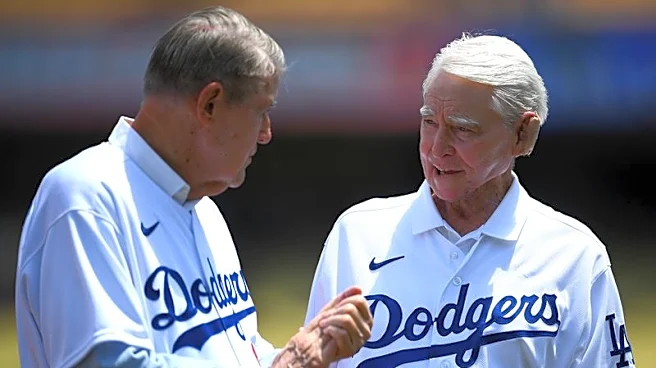
Fred Claire, the former general manager of the Los Angeles Dodgers who led the team to a World Series championship in 1988, has died at the age of 91. Claire passed away on Monday, his 91st birthday, in Pasadena, as announced by the team on Tuesday. He
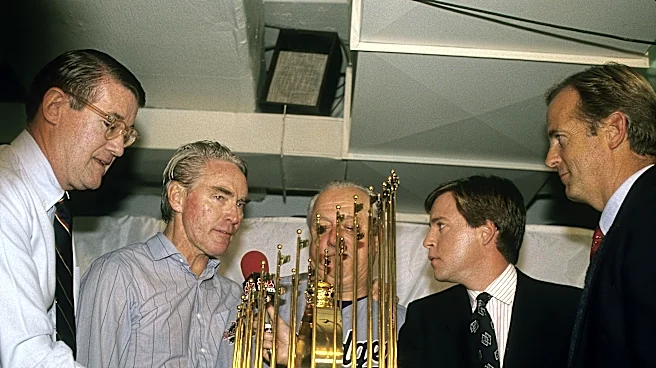
had recently entered hospice care. Claire's career with the Dodgers spanned 30 years, beginning in public relations before he ascended to the role of general manager. He was diagnosed with squamous cell skin cancer in 2015 and underwent extensive treatment, including surgery, radiation, chemotherapy, and immunotherapy, over an 11-year period. Team President and CEO Stan Kasten acknowledged Claire's significant contributions, stating that he brought many victories and Dodger legends to the franchise, including the 1988 World Series title, and expressed gratitude for his leadership during a memorable era. Claire's journey with the Dodgers began in 1969 as a public relations assistant, and he was promoted to vice president of public relations and promotions in 1975. He was instrumental in developing the 'Dodger Blue' branding and 'Think Blue' campaign, and the club became the first MLB team to exceed 3 million fans in 1978.
Why It's Important?
Fred Claire's passing marks the end of an era for a significant figure in Los Angeles Dodgers history and American baseball. His leadership as general manager, particularly in the wake of the controversial firing of Al Campanis, demonstrated a capacity for steady guidance during a turbulent period for the franchise. Claire's ability to navigate the team through a public relations crisis and subsequently build a World Series-winning team in 1988, highlighted by the acquisition of Kirk Gibson, underscores his strategic acumen and impact on the sport. His career trajectory, from sports writer to public relations executive and then general manager, illustrates a unique path to leadership within professional sports, emphasizing the value of diverse experiences in team management. The 1988 World Series victory, achieved against the heavily favored Oakland Athletics, remains one of baseball's most iconic underdog stories, cementing Claire's legacy as a pivotal figure in the Dodgers' storied history. His contributions extended beyond on-field success, as he was also recognized for his role in branding and fan engagement, setting benchmarks for MLB teams in attendance and marketing.
What's Next?
While Fred Claire's immediate impact on the Dodgers concluded with his departure in 1998, his legacy will continue to be celebrated within the organization and by baseball fans. The Dodgers will likely honor Claire's memory through various tributes, potentially including ceremonies at Dodger Stadium or recognition during future games. His contributions to the team's history, particularly the 1988 World Series championship, will remain a significant part of the franchise's narrative. Beyond the Dodgers, Claire's career serves as an example for aspiring sports executives, demonstrating how a background in communications and a deep understanding of the game can lead to high-level management roles. His post-GM activities, including teaching sports business courses and consulting, suggest a lasting influence on the next generation of sports professionals. The story of the 1988 team, a testament to his leadership, will continue to be recounted in baseball lore, inspiring future teams and fans alike.
Beyond the Headlines
Fred Claire's career offers a deeper look into the evolving landscape of sports management and the intersection of public relations, team building, and business. His ascent to general manager after a public relations scandal involving his predecessor, Al Campanis, highlights the critical role of crisis management and ethical leadership in professional sports. Claire's commitment to taking 'total and complete responsibility for baseball operations' upon his appointment underscores the importance of autonomy and clear authority in achieving success. The controversial trade of Mike Piazza, orchestrated by the new ownership without Claire's knowledge, also sheds light on the complexities and potential conflicts that arise when ownership changes, particularly when business interests from outside baseball influence core team decisions. This incident ultimately led to Claire's departure, illustrating the delicate balance between sports operations and corporate objectives. His story reflects the broader shifts in baseball ownership and management, moving from traditional baseball figures to corporate entities, and the challenges this transition can pose for team identity and fan loyalty.