

What's Happening?
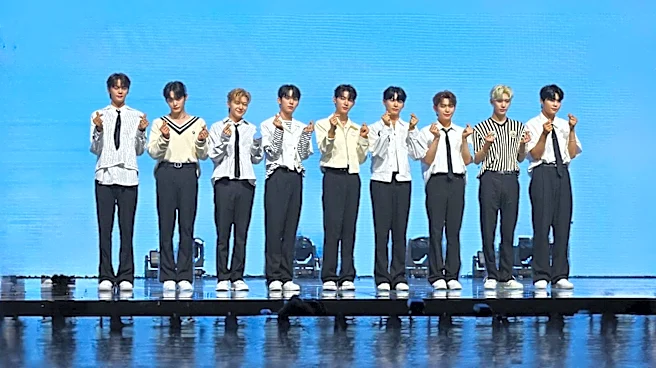
Singer Jeon So-mi has publicly addressed a controversy regarding her wardrobe choice during a reunion performance with her project group I.O.I at the 2026 Melon Music Awards (MMA 2026). The group, which reunited for its tenth anniversary, performed after
winning 'Best Musical Style' and 'TOP10' awards. During the performance, Jeon So-mi wore black attire, while other members wore white, leading to criticism on online communities. In response, Jeon So-mi conducted a live broadcast to clarify the situation, stating, "I didn't want to stand out more than anyone else." She emphasized her preference for integration and denied any intention to wear a 'prettier dress.' She also noted that both the MMA 2026 organizers and the stylist were consistent, and there was no such intention behind her outfit. She expressed her indignation, suggesting that a black outfit without bright elements might actually make her less noticeable.
Why It's Important?
This incident highlights the intense scrutiny and high expectations placed on K-pop idols, where even wardrobe choices can become subjects of widespread public debate and controversy. For Jeon So-mi, the need to directly address these criticisms through a live broadcast underscores the pressure artists face to manage their public image and fan perceptions. Such controversies, regardless of their merit, can impact an artist's reputation and fan sentiment. For the K-pop industry, it reflects the powerful influence of online communities and the rapid spread of opinions, which artists must navigate carefully. It also brings to light the complexities of styling and artistic presentation in group performances, where visual harmony is often expected, and deviations can be misinterpreted.
What's Next?
Following Jeon So-mi's direct clarification, the immediate impact will likely be a reduction in the online debate surrounding her wardrobe choice. Her explanation aims to quell the controversy and reassure fans and the public about her intentions. The incident may prompt stylists and artists in the K-pop industry to be even more meticulous in coordinating group outfits to avoid similar misunderstandings in future performances. For Jeon So-mi, continued focus will likely be on her musical activities and future engagements, with the hope that this explanation will allow the focus to return to her artistic contributions rather than external controversies. The broader K-pop community may observe how such public clarifications influence fan perception and media narratives.
Beyond the Headlines
This controversy delves into the deeper cultural expectations within K-pop regarding group cohesion and individual expression. While artists are expected to shine, there's often an unspoken rule about maintaining visual unity, especially in reunion performances that evoke nostalgia. Jeon So-mi's explanation touches upon the subjective nature of 'standing out' and how different interpretations can lead to public outcry. It also underscores the double-edged sword of social media for celebrities: a direct channel to communicate with fans, but also a breeding ground for rapid criticism and speculation. The incident serves as a reminder of the constant tightrope walk K-pop idols navigate between personal style, group identity, and public perception, where every detail is magnified and scrutinized by a highly engaged audience.