



What's Happening?
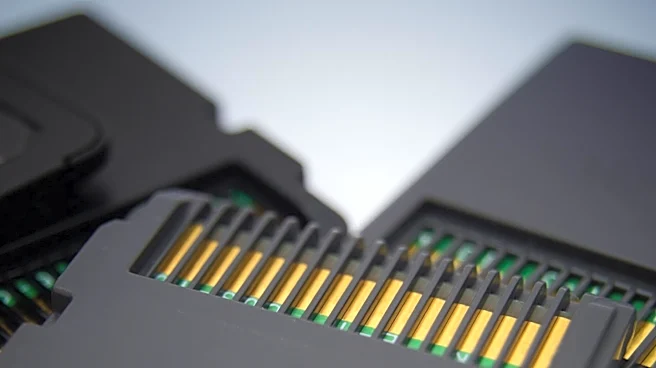
According to a report by DigiTimes, the major memory suppliers Samsung, SK hynix, and Micron have reportedly sold out their entire DRAM and HBM capacity for the year 2027. This development is driven by the increasing demand from the AI sector and long-term
agreements with major companies. The report highlights that the demand for memory, particularly from AI companies and hyperscalers, has far exceeded supply, leading to a situation where these companies are 'begging' for supply and paying premium prices. Traditionally, companies secure memory for the following year in July and August, but the current scenario suggests that many companies may face shortages in 2027. The report also notes that while NAND supply is still available, it is expected to be fully booked by the end of August 2026.
Why It's Important?
The sell-out of DRAM and HBM capacity for 2027 underscores the significant impact of AI demand on the memory industry. This situation could lead to a tighter supply of DRAM for consumer devices such as PCs, laptops, and smartphones, potentially affecting the consumer electronics market. The high demand and limited supply could drive up prices, impacting manufacturers and consumers alike. Companies that rely heavily on memory for their operations, particularly in the AI sector, may face challenges in securing the necessary resources, which could hinder their growth and innovation. This development highlights the need for strategic planning and investment in memory production to meet future demands.
What's Next?
As the memory supply for 2027 is already sold out, companies may need to explore alternative strategies to secure their memory needs. This could include negotiating new long-term agreements or investing in memory production capabilities. The industry may also see increased investment in research and development to improve memory efficiency and capacity. Additionally, companies may need to consider diversifying their supply chains to mitigate the risk of shortages. The situation also presents an opportunity for new players to enter the market and address the growing demand for memory.