





What's Happening?
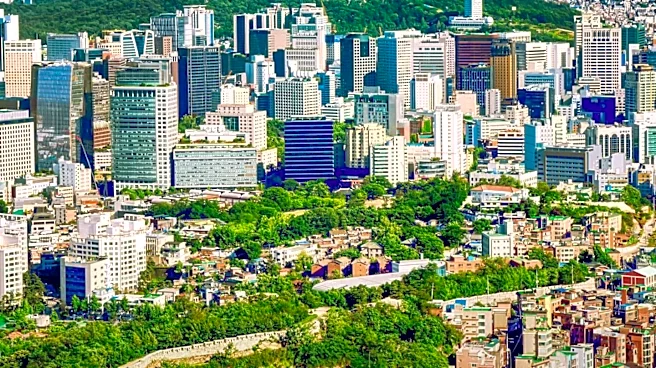
North Jeolla Province in South Korea has announced its intention to pursue a solo bid to host the 2036 Summer Olympics. This decision comes after discussions with Seoul over a potential co-hosting arrangement fell through. Governor Lee Won-taeg of North Jeolla and
Seoul Mayor Oh Se-hoon met last Thursday and mutually decided against a joint bid, citing 'realistic conditions and positions for both sides' without further elaboration. North Jeolla had previously beaten Seoul in February 2025 to become South Korea's sole candidate for the 2036 Olympics. However, the province later considered co-hosting with Seoul due to concerns about its own infrastructure, including accommodations, transportation, and venues. The International Olympic Committee (IOC) included South Korea on its list of seven countries vying for the 2036 Olympics on November 3. Candidates are scheduled to give virtual presentations to the IOC Future Host Commission later in November, with 'strategic dialogue' with host hopefuls set to open in March 2027.
Why It's Important?
North Jeolla's solo bid for the 2036 Summer Olympics carries significant implications for regional development and national prestige in South Korea. A successful bid would bring substantial investment in infrastructure, tourism, and economic growth to the province, potentially transforming its global profile. However, the decision to go solo, especially after acknowledging infrastructure limitations, highlights the immense financial and logistical challenges involved in hosting such a large-scale event. For South Korea, securing the 2036 Olympics would build upon its history of hosting major international sporting events, including the 1988 Seoul Summer Olympics and the 2018 PyeongChang Winter Olympics, further solidifying its position on the global sports stage. The competition with other strong contenders like Germany, Hungary, India, Qatar, South Africa, and Turkey means North Jeolla will need to present a compelling and robust proposal to the IOC, demonstrating its capacity to deliver a successful and sustainable Olympic Games.
What's Next?
North Jeolla Province will now focus on developing and presenting its solo bid to the International Olympic Committee. The province's governor, Lee Won-taeg, and his team will need to address the previously identified infrastructure concerns, outlining concrete plans for accommodations, transportation, and venues to convince the IOC of their readiness. The upcoming virtual presentations to the IOC Future Host Commission later in November will be a critical step in this process. Following these presentations, the IOC's Executive Board will initiate 'strategic dialogue' with the host hopefuls in March 2027, which will involve more detailed discussions and evaluations. North Jeolla will need to differentiate its bid from other strong international contenders and demonstrate a clear vision for the 2036 Games. The province's ability to secure national government support and private sector investment will be crucial for the success of its solo endeavor.
Beyond the Headlines
The pursuit of the Olympic Games by a single province, rather than a major capital city, reflects a broader trend in sports mega-events where smaller regions seek to leverage such opportunities for accelerated development and global recognition. This approach often comes with unique challenges, particularly regarding financial sustainability and the long-term utility of newly built infrastructure. The decision to forgo a joint bid with Seoul, despite initial considerations of infrastructure limitations, suggests a strong provincial ambition and a belief in its own capabilities. This situation also highlights the internal dynamics within South Korea regarding regional development and competition for national resources and prestige. The IOC's selection process increasingly emphasizes sustainability and legacy, meaning North Jeolla's bid will need to demonstrate not just the capacity to host, but also a clear plan for how the Games will benefit the region and its residents in the long run, avoiding the pitfalls of 'white elephant' venues.