







What's Happening?
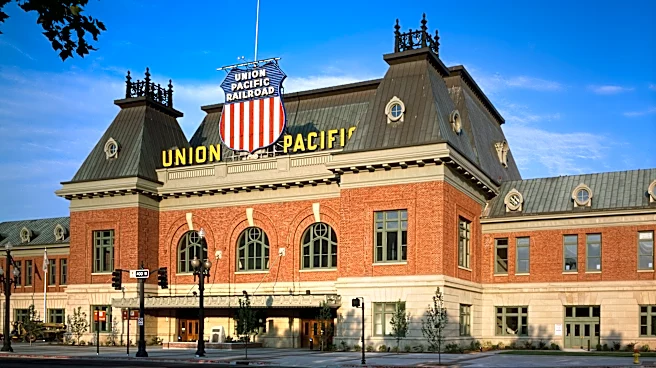
Thomas C. Durant, a prominent figure in 19th-century American railroad development, played a pivotal role as vice president and general manager of the Union Pacific Railroad. Born in 1820, Durant initially pursued medicine before transitioning to business,
where he gained recognition in financial circles. He partnered with engineer Henry Farnam to build several railroads, including the Michigan Southern, the Chicago, Rock Island and Pacific, and the Mississippi and Missouri. His most significant undertaking was with the Union Pacific, where he was instrumental in extending the transcontinental railroad. According to the Union Pacific's account, Durant also served as president of the Credit Mobilier, a construction company formed by Union Pacific executives. This company secured construction contracts and received securities as payment, with contracts set high enough to allow for selling securities below par. The chronological history indicates that Durant and other officers reaped $23 million in dividends from this arrangement, a figure corroborated by Gale's account.
Why It's Important?
Durant's involvement with the Union Pacific and the Credit Mobilier had profound implications for U.S. infrastructure development and public trust. The Credit Mobilier scheme, described by Gale as an arrangement where a small group contracted with itself, charged exorbitant prices, and profited from often faulty work, led to significant financial irregularities. Original cost estimates for the railroad were around $30,000 per mile, but Credit Mobilier doubled this figure. This overcapitalization left the Union Pacific with a shoddily built line and a heavy financial burden. The scandal eventually reached Congress, implicating several high-ranking officials, including Vice President Schuyler Colfax and future President James A. Garfield, though they were later absolved. Oakes Ames, a House member, was censured for distributing Credit Mobilier stock as political favors. This episode highlighted the risks of unchecked corporate power and political corruption during a critical period of national expansion, undermining public confidence in large-scale government-backed projects.
What's Next?
While Thomas C. Durant's direct influence ended with his departure from the Union Pacific directorate in May 1869 and his subsequent sale of stock, the legacy of the Credit Mobilier scandal continued to shape public policy and corporate governance. The revelations of financial misconduct and political influence peddling led to increased scrutiny of railroad financing and government contracts. In the immediate aftermath, much of Durant's fortune was lost in the Panic of 1873, and his health declined, leading to his retirement. The scandal served as a cautionary tale, contributing to a demand for greater transparency and accountability in future public-private partnerships. It also fueled public sentiment against powerful industrialists and monopolies, laying groundwork for later regulatory reforms aimed at curbing corporate excesses and protecting public interest in major infrastructure projects.
Beyond the Headlines
The Credit Mobilier scandal, orchestrated by figures like Thomas C. Durant, represents a critical moment in American history, illustrating the ethical and legal challenges inherent in rapid industrial expansion. Beyond the immediate financial losses and political fallout, the scandal exposed deep-seated issues of corporate greed and the vulnerability of the political system to undue influence. It underscored the tension between economic progress and ethical conduct, prompting a national conversation about the responsibilities of corporations and public officials. The event contributed to a broader public disillusionment with Gilded Age capitalism and its perceived corruption, influencing the Progressive Era's push for reforms. The scandal's impact extended to the public's perception of large corporations, fostering a skepticism that would persist for decades and shape regulatory frameworks designed to prevent similar abuses in the future. It remains a significant case study in the history of American business ethics and political accountability.