

What's Happening?
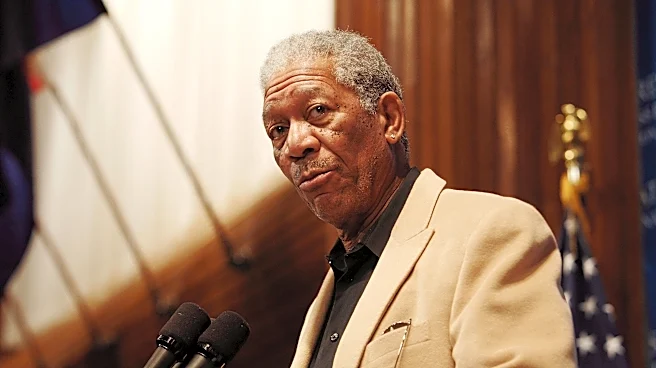
Morgan Freeman and his longtime producing partner, Lori McCreary, have voiced significant concerns regarding the unauthorized use of artificial intelligence (AI) to replicate Freeman's voice. Freeman stated that AI has made him 'say things he never said,'
leading his lawyers to address numerous instances of his voice being used without consent. McCreary noted that they receive daily calls about products being sold online using Freeman's voice, to which he has no connection. While Freeman is not against technology itself, having co-founded Revelations Entertainment in 1996 to integrate new tools into filmmaking, he emphasizes the critical issue of privacy. McCreary, a computer science expert, highlights that generative AI, which can create a likeness or voice from a text prompt, differs from previous technological advancements in its potential for misuse. The duo aims to stay ahead of technological changes to help mold them for better storytelling, but they stress the importance of protecting individual privacy in the face of evolving AI capabilities.
Why It's Important?
The concerns raised by Morgan Freeman and Lori McCreary underscore a growing challenge within the entertainment industry and broader society regarding intellectual property rights, personal privacy, and the ethical implications of AI. The unauthorized replication of voices and likenesses through generative AI poses a significant threat to artists' control over their work and public image. This issue has direct implications for U.S. industries, particularly Hollywood, where actors' unions, such as SAG-AFTRA, have already secured contracts requiring consent for AI repurposing of performers' work. The proliferation of deepfakes and AI-generated content without consent can lead to reputational damage, financial exploitation, and a blurring of lines between authentic and fabricated information. The debate also highlights the need for robust legal frameworks and industry standards to govern AI usage, ensuring that technological advancements serve creative endeavors without infringing upon individual rights. The potential for AI to create content that appears authentic but is entirely fabricated could erode public trust and create new challenges for verifying information.
What's Next?
The ongoing discussions and legal actions surrounding AI voice replication are likely to intensify, prompting further development of industry standards and potentially new legislation. Revelations Entertainment is actively navigating these challenges, using AI in current projects while meticulously addressing consent and compensation for all involved. McCreary indicated that they are currently inventing the processes for documenting consent and payment in AI-assisted productions. The entertainment industry, including unions and production companies, will continue to work towards establishing clear guidelines for AI use, particularly concerning generative AI and its impact on performers. The broader legal landscape may also see new precedents set as more cases of unauthorized AI replication emerge. Stakeholders will likely focus on distinguishing between AI as a tool for post-production enhancements and generative AI that creates new content without direct human input, aiming to protect artists while still embracing technological innovation.
Beyond the Headlines
The ethical and legal dimensions of AI in creative fields extend beyond immediate concerns of voice replication to fundamental questions about authorship, authenticity, and human creativity. The ability of AI to generate content that mimics human performance challenges traditional notions of artistic ownership and the value of human talent. This development could lead to a long-term shift in how intellectual property is defined and protected in the digital age. Culturally, the widespread use of AI-generated content, especially deepfakes, could desensitize audiences to authenticity, making it harder to discern truth from fabrication. This has profound implications for media literacy and critical thinking in society. The tension between technological advancement and the preservation of individual rights and artistic integrity will likely remain a central theme, prompting ongoing debates about the responsible development and deployment of AI across various sectors.