






What's Happening?
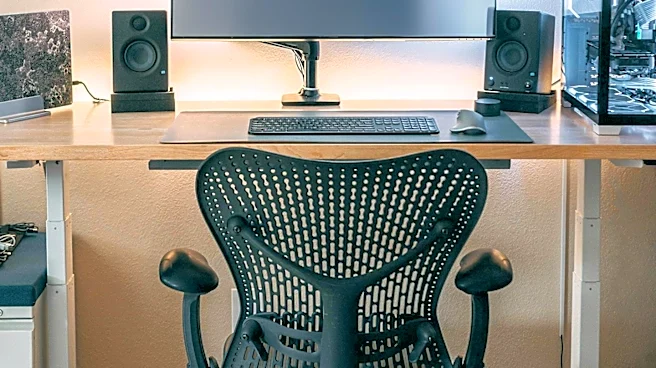
Adjustable desks are becoming a popular solution for creating ergonomic and flexible workspaces, particularly in home office settings. These desks allow users to easily switch between sitting and standing positions, promoting healthier posture and increased
comfort throughout the workday. The primary types include electric desks, which offer effortless height adjustment via a motorized system, and manual desks, which require a crank or lever. Adjustable desks come in various shapes, such as rectangular for minimalist setups, L-shaped for extensive workspaces, and mobile desks for compact, portable solutions. The design of these desks prioritizes stability at all heights, with many higher-end models featuring reinforced frames to prevent wobbling. This adaptability aims to enhance productivity and reduce physical strain associated with prolonged sitting.
Why It's Important?
The widespread adoption of remote work in the U.S. has brought increased attention to the importance of ergonomic workspaces. Prolonged sitting can lead to various health issues, including back pain, poor circulation, and reduced energy levels, directly impacting employee well-being and productivity. Adjustable desks offer a practical solution by allowing users to alternate between sitting and standing, which can alleviate physical discomfort and boost focus. For individuals, this means a healthier work experience and potentially fewer health-related absences. For businesses, promoting ergonomic setups can lead to a more engaged and productive workforce, ultimately contributing to economic efficiency. The flexibility offered by these desks also caters to diverse work styles and physical needs, making them a valuable investment for modern work environments.
What's Next?
The market for adjustable desks is expected to continue its growth trajectory as more U.S. companies embrace hybrid and remote work models. Future developments may include more advanced smart features, such as integration with health tracking apps, personalized height recommendations, and automated adjustments based on user preferences. Manufacturers are likely to focus on enhancing the aesthetic appeal of adjustable desks, offering a wider range of materials and designs to seamlessly blend with various home decor styles. There may also be an increase in demand for more compact and portable adjustable desk solutions to cater to smaller living spaces. As ergonomic awareness grows, adjustable desks could become a standard feature in both home and traditional office environments, further solidifying their role in promoting a healthier work culture.
Beyond the Headlines
The rise of adjustable desks signifies a broader cultural shift towards prioritizing health and well-being in the workplace. It challenges the traditional sedentary work model and encourages a more dynamic approach to daily tasks. This trend extends beyond physical health, impacting mental well-being by reducing fatigue and promoting a sense of control over one's work environment. The investment in such ergonomic tools reflects a growing understanding that employee comfort directly correlates with productivity and job satisfaction. Furthermore, the increasing availability and affordability of adjustable desks democratize access to ergonomic benefits, making healthier work practices attainable for a wider population. This movement could inspire further innovations in workplace design, fostering environments that actively support employee health and engagement.