







What's Happening?
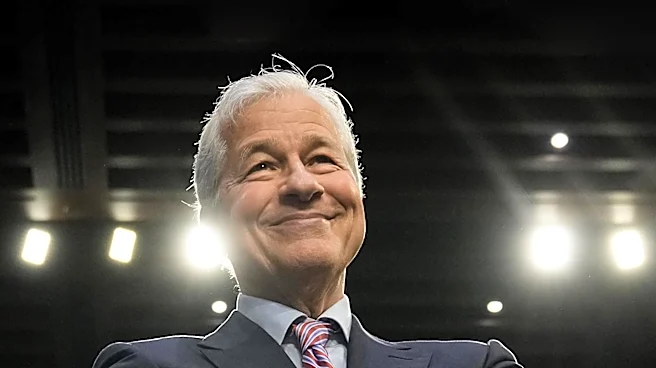
Jamie Dimon, the CEO of JPMorgan Chase for two decades, is reportedly considering retirement as he approaches 70. While his departure is not imminent, the company is actively preparing for a leadership transition. This preparation includes the recent
promotions of Doug Petno and Troy Rohrbaugh to co-presidents, who are considered potential successors. The board of directors at JPMorgan Chase is deeply involved in succession planning, aiming for a smooth transition when Dimon eventually steps down. Dimon's tenure has been marked by significant growth and stability for the financial giant, and the proactive approach to succession indicates a focus on maintaining the company's strong market position.
Why It's Important?
The potential retirement of a long-serving and influential CEO like Jamie Dimon from a major financial institution such as JPMorgan Chase is significant for the U.S. business landscape. Dimon's leadership has shaped the bank's strategy and performance for two decades, making his eventual successor a critical choice. A well-managed succession plan, as JPMorgan Chase appears to be implementing, can reassure investors and maintain market confidence. Conversely, an abrupt or poorly handled transition could lead to uncertainty and volatility in the company's stock and potentially impact the broader financial sector. The selection of an internal candidate, likely one of the newly appointed co-presidents, suggests a continuation of the established corporate culture and strategic direction, which could benefit long-term stability.
What's Next?
JPMorgan Chase will likely continue to evaluate the performance and leadership capabilities of Doug Petno and Troy Rohrbaugh in their co-president roles. This period will serve as an extended assessment for the board to determine the most suitable successor to Jamie Dimon. Investors will closely monitor any further announcements regarding Dimon's retirement timeline and the progression of the succession plan. The company's focus will remain on ensuring a seamless transition that preserves its operational efficiency and market standing. Any future changes in leadership are expected to be gradual, reflecting the bank's commitment to stability rather than radical shifts, unless market conditions necessitate otherwise.
Beyond the Headlines
The succession planning at JPMorgan Chase highlights a broader trend in corporate governance, where boards are increasingly prioritizing robust leadership transition strategies. The emphasis on internal promotions for potential CEO candidates reflects a desire to maintain institutional knowledge, corporate culture, and strategic continuity. This approach can foster a sense of stability and predictability for employees, clients, and shareholders. Furthermore, the process underscores the immense influence a long-tenured CEO can have on a company's identity and trajectory, making the selection of a successor a pivotal moment that extends beyond mere financial performance to encompass the very ethos of the organization.