



What's Happening?
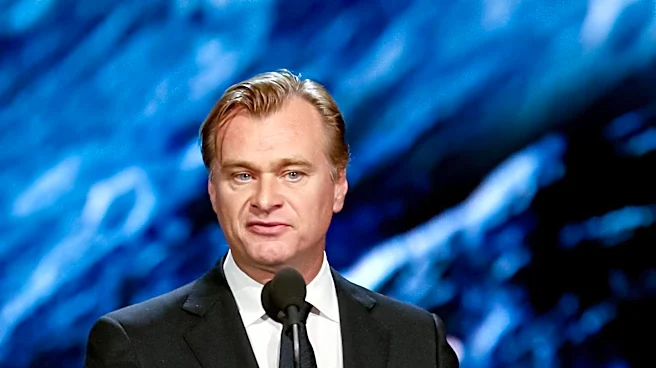
Filmmaker Christopher Nolan has stated that deleted scenes from his film 'The Odyssey' will never be released, and there will be no director's cut of the movie. Speaking with The Independent, Nolan revealed that numerous deleted scenes were discarded
and will remain unseen by the public. He emphasized his belief that director's cuts are unnecessary, as he prefers to stand by the theatrical version of his films. Nolan explained his process as a writer-director, noting that he aims to eliminate any unnecessary material before filming begins, especially for demanding productions like 'The Odyssey'. He expressed a disinclination to spend time shooting scenes that ultimately will not be included in the final cut. For Nolan, the version released in theaters is the definitive and intended version of his work, reflecting his commitment to the final edit presented to audiences.
Why It's Important?
Nolan's stance on director's cuts and deleted scenes is significant for the film industry and for audiences who often anticipate extended versions of popular movies. His philosophy reinforces the idea that the theatrical release is the complete artistic vision, challenging the growing trend of re-releasing films with additional content. This approach could influence other filmmakers to be more decisive in their editing processes, prioritizing a singular, polished final product over potential future extended editions. For fans, it sets clear expectations, indicating that what they see in cinemas is the definitive experience. This also highlights Nolan's consistent artistic integrity, where he views his role as fighting for the best possible cut to be presented initially, rather than offering alternative versions later.
What's Next?
Given Christopher Nolan's firm stance, it is highly unlikely that any deleted scenes or a director's cut of 'The Odyssey' will be released in the future. This decision aligns with his long-standing career practice of supporting the theatrical version as the final and complete film. Audiences should not expect any further editions or extended content for 'The Odyssey'. This commitment to the initial release means that future home video releases or streaming versions will almost certainly be identical to the theatrical cut. Nolan's consistent approach suggests that this will remain his policy for upcoming projects as well, reinforcing his artistic control over the final product presented to the public.
Beyond the Headlines
Nolan's rejection of director's cuts delves into a broader discussion about artistic finality and the commercial pressures within the film industry. In an era where extended cuts and special editions are common marketing tools, Nolan's position champions the director's original intent as paramount. This perspective challenges the notion that more content always equates to a better or more complete artistic experience. It also raises questions about the perceived value of deleted scenes, often seen by fans as valuable insights into the filmmaking process. Nolan's approach suggests that these excised moments are not merely extra content but rather material deemed unnecessary for the narrative he wishes to convey, reinforcing the idea that a film's integrity lies in its carefully curated final form.