





What's Happening?
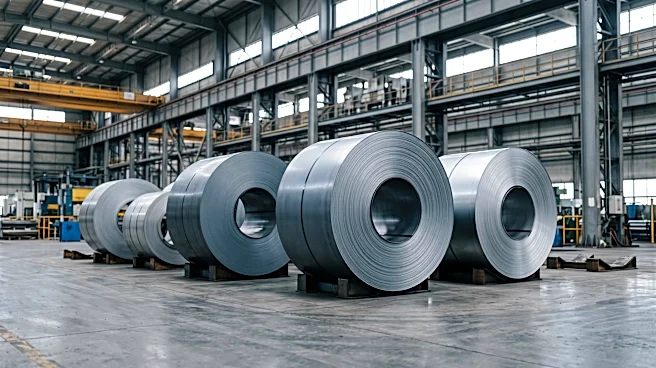
The U.S. Department of Commerce (Commerce) has issued a preliminary determination that Hyundai Steel Company and POSCO, two South Korean steel producers, received countervailable subsidies for their production of certain cold-rolled steel flat products.
This finding is part of an administrative review covering the period from January 1, 2024, through December 31, 2024. As a result, Commerce has preliminarily determined net countervailable subsidy rates of 0.66 percent ad valorem for Hyundai Steel Company and 1.10 percent ad valorem for POSCO. Additionally, Commerce is rescinding its review, in part, for 46 other companies after petitioners, including Nucor Corporation and United States Steel Corporation, withdrew their requests for review concerning these entities. The review is being conducted in accordance with the Tariff Act of 1930, as amended, which assesses whether financial contributions by an authority provide a benefit to recipients and are specific. Interested parties are invited to submit comments on these preliminary results.
Why It's Important?
This preliminary determination by the U.S. Department of Commerce is significant for the U.S. steel industry and international trade relations. The finding of countervailable subsidies suggests that Korean steel producers may have received unfair advantages, potentially impacting the competitiveness of domestic U.S. steel manufacturers. U.S. companies like Nucor Corporation and United States Steel Corporation, who were petitioners in this review, stand to benefit from the imposition of countervailing duties, as it could level the playing field by offsetting the alleged subsidies. Conversely, the affected Korean companies, Hyundai Steel and POSCO, face potential financial implications through increased duties on their cold-rolled steel products imported into the U.S. This action underscores the U.S. government's commitment to enforcing trade laws and protecting domestic industries from what it perceives as unfair trade practices, which can influence future trade policies and negotiations with South Korea.
What's Next?
Following this preliminary determination, the U.S. Department of Commerce will proceed with further steps in the administrative review process. Interested parties are invited to submit case briefs or other written comments to the Assistant Secretary for Enforcement and Compliance. Rebuttal briefs, limited to issues raised in the case briefs, may also be filed. Commerce intends to verify the information relied upon for the final results. Unless the deadline is extended, Commerce aims to issue the final results of this administrative review within 120 days of the publication of these preliminary results in the Federal Register. Upon issuance of the final results, Commerce will instruct U.S. Customs and Border Protection (CBP) to assess countervailing duties on all appropriate entries covered by this review and to collect cash deposits of estimated countervailing duties for future shipments.
Beyond the Headlines
The Commerce Department's action highlights the ongoing complexities and sensitivities in global trade, particularly concerning subsidies and their impact on fair competition. The determination against Hyundai Steel and POSCO could set a precedent for how the U.S. addresses similar cases of alleged government support in other industries or from other countries. This focus on countervailable subsidies reflects a broader U.S. trade policy aimed at ensuring that foreign goods compete on market-based terms, rather than through government assistance. The outcome of such reviews can influence investment decisions, supply chain strategies, and the overall economic landscape for both U.S. and international businesses involved in the steel sector, potentially leading to shifts in global steel production and trade flows.