


What's Happening?
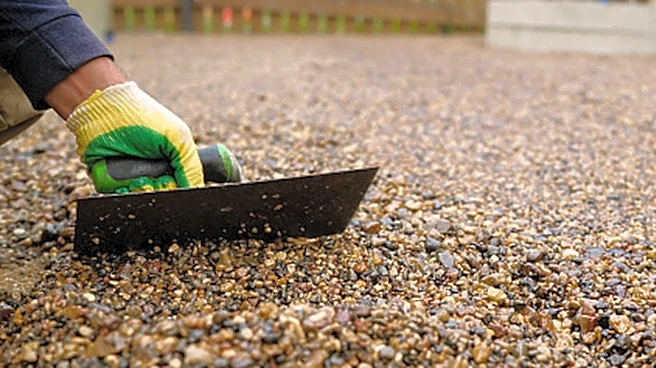
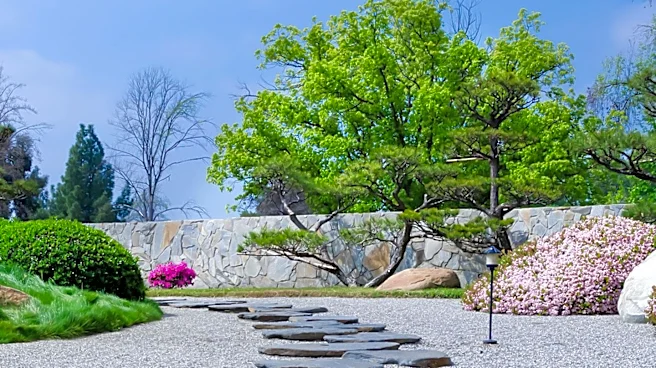
A new trend in garden design is moving away from traditional paved paths in favor of gravel and stepping stones. This approach creates a more natural and integrated feel within the garden landscape. Instead of rigid, continuous surfaces like brick or concrete,
designers are utilizing pale gravel and irregularly shaped stone slabs. This allows the path to blend seamlessly with surrounding plantings such as hydrangeas, bamboo, Japanese maples, ferns, and iris. The design often incorporates moss-covered soil that meets the gravel in broad, uneven curves, eliminating the need for conventional path edging like metal strips or uniform rows of stones. This method allows the planting to frame the route itself, with foliage and flower heads, particularly from blue and violet hydrangeas, often overlapping the path's edge. The use of loose gravel also enables paths to curve organically around planting areas, with individual stones marking each step.
Why It's Important?
This shift in garden path design is significant for several reasons, primarily impacting landscape architecture, home aesthetics, and environmental integration. For homeowners, it offers a softer, more organic aesthetic that can enhance the natural beauty of a garden, moving away from the often stark appearance of traditional paving. Environmentally, permeable surfaces like gravel and stepping stones can improve water drainage and reduce runoff compared to solid paved areas, which can contribute to healthier soil and plant life. This design philosophy also encourages a more intimate connection between the path and the garden's flora, allowing plants to dictate the path's flow rather than being confined by rigid borders. It provides a versatile solution for creating defined walkways that feel less intrusive and more harmonious with the natural environment, potentially increasing property value through enhanced curb appeal and sustainable design practices.
What's Next?
The adoption of gravel and stepping stone paths is likely to continue growing as homeowners and landscape designers seek more natural and sustainable garden solutions. We can expect to see an increase in the availability of diverse gravel types and natural stone options to cater to this trend. Educational resources for DIY gardeners on proper installation and maintenance of these types of paths may also become more prevalent. Furthermore, this design approach could influence urban planning and public park designs, where integrating natural elements and permeable surfaces is increasingly prioritized for ecological benefits. The emphasis on organic shapes and material transitions suggests a broader movement towards less formal and more environmentally conscious landscape design, potentially leading to innovations in permeable paving materials and integrated planting schemes that further blur the lines between hardscaping and softscaping.
Beyond the Headlines
Beyond the immediate aesthetic and environmental benefits, this design trend reflects a deeper cultural shift towards valuing natural beauty and sustainability in everyday living spaces. It challenges the conventional notion of a garden path as a purely functional, utilitarian element, elevating it to an integral part of the garden's artistic composition. The deliberate choice of irregular stones and flowing gravel paths over uniform, rigid paving speaks to a desire for imperfection and organic growth, mirroring broader societal trends that appreciate authenticity and natural forms. This approach also encourages a more mindful interaction with the garden, as the varied textures and shapes of the path invite a slower, more contemplative stroll. It subtly redefines the relationship between humans and nature within a domestic setting, promoting a sense of tranquility and connection to the natural world, and potentially influencing future architectural and design philosophies that prioritize ecological harmony and sensory experience.