







What's Happening?
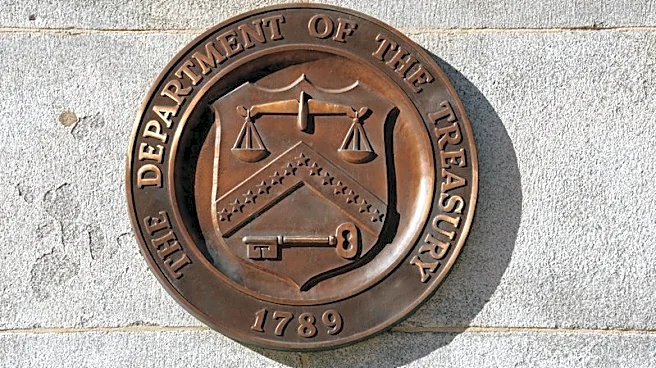
The U.S. Department of the Treasury’s Financial Crimes Enforcement Network (FinCEN) has issued an order, as part of 'Operation Economic Outcast,' effectively severing MEXC Global’s access to the U.S. financial system. MEXC Global, a convertible virtual
currency (CVC) exchanger, is accused of facilitating at least $16 billion in illicit transactions. These transactions are linked to Iranian, North Korean, and Russian sanctions evasion, as well as cybercrime, including direct dealings with sanctioned entities. Secretary of the Treasury Scott Bessent stated that financial institutions cannot support the Iranian regime and simultaneously access the U.S. financial system. The FinCEN order prohibits U.S. financial institutions from processing any fund transfers involving MEXC Global, with violations potentially leading to civil or criminal penalties. MEXC Global, founded in 2018, is one of the top 20 largest CVC exchangers globally, processing over $1 billion in daily transactions and holding approximately $5 billion in reserves.
Why It's Important?
This action by FinCEN is a significant move to combat illicit finance and enforce U.S. sanctions, particularly against entities that exploit digital assets. By cutting off MEXC Global, the Treasury Department aims to disrupt a major conduit for sanctions evasion by adversarial nations like Iran, North Korea, and Russia. The $16 billion in illicit transactions highlights the scale of the problem and the critical role CVC exchangers can play in undermining global financial security. This measure sends a strong message to other virtual currency platforms that the U.S. will aggressively pursue those found to be facilitating illegal activities. For U.S. financial institutions, this order mandates increased vigilance and compliance to avoid penalties. The action also underscores the growing challenge of regulating the cryptocurrency space to prevent its misuse by illicit actors, impacting the broader digital asset ecosystem and its perception within traditional finance.
What's Next?
The FinCEN order will become effective 30 days after its publication in the Federal Register. U.S. financial institutions must ensure they cease all fund transfers involving MEXC Global to avoid civil or criminal penalties. The Treasury Department, through FinCEN and the Office of Foreign Assets Control (OFAC), is expected to continue its 'Operation Economic Outcast' to target other entities facilitating illicit finance, especially those connected to sanctions evasion. Individuals with information about sanctions violations that lead to successful enforcement actions may be eligible for whistleblower awards. This action will likely prompt other CVC exchangers to review and strengthen their anti-money laundering (AML) and customer identification policies to avoid similar repercussions, potentially leading to a more regulated and compliant cryptocurrency market globally.
Beyond the Headlines
The designation of MEXC Global as a primary money laundering concern highlights the evolving nature of financial crime, with illicit actors increasingly leveraging convertible virtual currencies to bypass traditional financial controls. This action by FinCEN not only targets a specific entity but also serves as a broader warning about the vulnerabilities within the digital asset ecosystem. The involvement of sanctioned entities like Garantex and the Iranian Revolutionary Guard Corps (IRGC) underscores the national security implications of unregulated cryptocurrency flows. The case also brings to light the challenges of enforcing sanctions in a decentralized digital environment and the need for international cooperation to combat such illicit activities. This move could accelerate discussions around global cryptocurrency regulation and the development of more robust frameworks to prevent digital assets from being used to fund terrorism, cybercrime, and other illegal endeavors.