






What's Happening?
Chevron Corporation announced earnings of $9.9 billion, or $5.06 per share (diluted), for the third quarter of 2026, achieving an 18 percent return on capital employed. The company's U.S. production increased by 27 percent compared to two years ago, with
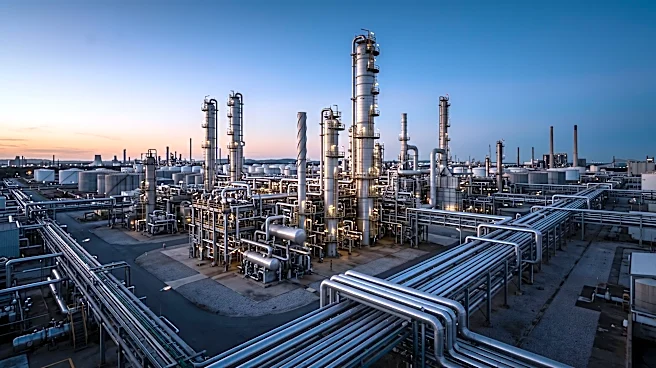
U.S. upstream earnings higher than the previous year due to increased liquids realizations and reduced operating expenses. Chevron's U.S. refineries achieved a record crude throughput of 1.09 million barrels per day, operating at nearly 98 percent capacity. The company also expanded its acreage in Venezuela and signed agreements to reduce Bakken midstream costs by approximately 50 percent, aiming to enhance the asset's competitiveness. Cash flow from operations for the quarter was $16.0 billion, an increase from the previous year, driven by higher earnings and increased cash distributions from Tengizchevroil LLP (TCO). Total debt was reduced by an additional $3.5 billion, strengthening the company's balance sheet.
Why It's Important?
Chevron's robust third-quarter performance underscores the company's operational efficiency and strategic focus on key assets, particularly within the U.S. The record crude throughput at U.S. refineries highlights strong domestic demand for refined products and Chevron's capacity to meet it, contributing to energy security. The significant reduction in Bakken midstream costs is crucial for improving the profitability and long-term viability of its operations in that region, making U.S. shale production more competitive. The increased U.S. upstream earnings, driven by higher liquids realizations, reflect favorable market conditions and effective resource management. Furthermore, the substantial debt reduction strengthens Chevron's financial position, providing greater flexibility for future investments and shareholder returns, including the declared quarterly dividend of $1.78 per share. This performance signals positive momentum for a major player in the U.S. energy sector.
What's Next?
Chevron plans to continue its strategic investments, including a $7 billion investment over the next five years in its Venezuelan joint ventures to unlock production growth. The company will also focus on further strengthening its Bakken upstream operations through cost reductions and increased operational flexibility. The recently announced offshore crude oil and natural gas condensate discovery in Angola and an exploration agreement in Libya's Sirte Basin indicate future international growth avenues. Domestically, the start of production at the new Bunge Chevron Ag Renewables LLC oilseed-processing facility in Louisiana will supply additional feedstocks for transportation fuels, aligning with evolving energy demands. Investors will monitor the execution of these strategic initiatives and their impact on future earnings and production volumes, as well as any further debt reduction efforts.
Beyond the Headlines
Chevron's results reflect broader trends in the global energy market, where major integrated companies are balancing traditional fossil fuel production with strategic investments in new energy sources and efficiency improvements. The focus on reducing midstream costs in the Bakken illustrates the industry's continuous drive for operational optimization and cost-effectiveness in mature shale plays. The expansion into renewable feedstock processing facilities, like the one in Louisiana, signals a gradual shift towards diversifying energy portfolios and meeting growing demand for lower-carbon fuels. This dual strategy of maximizing returns from conventional assets while exploring new energy ventures is critical for long-term sustainability and resilience in a dynamic energy landscape, addressing both current energy needs and future environmental considerations. The company's strong financial health also positions it well to navigate potential market volatility and regulatory changes.