






What's Happening?
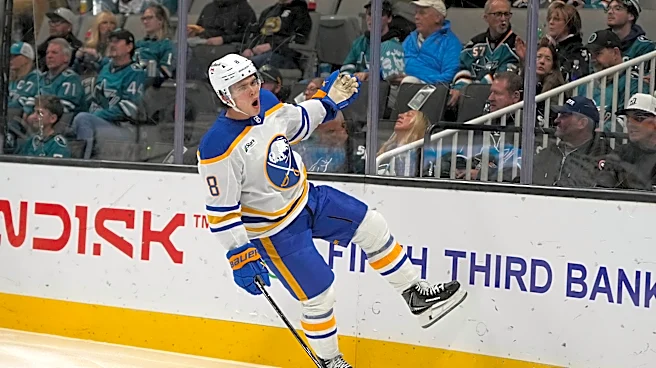
The Buffalo Sabres are preparing for their game against the Anaheim Ducks on October 29, 2026, with several significant roster adjustments. Forward Konsta Helenius is returning to Buffalo for further evaluation after sustaining a hit from San Jose Sharks
defenseman Jacob Trouba in a recent game, which limited his play. In response, Peyton Krebs will be moved from the fourth line to the first line to fill Helenius's vacant spot. Sam Carrick is set to return to the lineup after missing four games due to a middle-body injury. Additionally, Dennis Gilbert will replace Zach Metsa, who was a healthy scratch in the previous game against the Sharks. For the Anaheim Ducks, Pavel Mintyukov is anticipated to return after being sidelined for three games with a lower-body injury. The Ducks also made line adjustments in practice, with Gauthier and Killorn switching positions. These changes reflect both injury management and strategic decisions by both teams as they head into their upcoming contest.
Why It's Important?
These lineup changes are crucial for both the Buffalo Sabres and the Anaheim Ducks as they impact team dynamics, offensive and defensive strategies, and overall performance. For the Sabres, the absence of Konsta Helenius, a key forward, necessitates a significant reshuffle of their top lines, potentially affecting their scoring capabilities and chemistry. The promotion of Peyton Krebs to the first line offers him an opportunity to step into a more prominent role, but also places increased pressure on him to perform. The return of Sam Carrick provides a boost to the Sabres' depth and experience, especially after his absence due to injury. For the Ducks, Pavel Mintyukov's return from injury is a positive development, strengthening their defensive corps. The line adjustments for both teams indicate coaches are actively seeking optimal combinations to gain a competitive edge, which could influence the outcome of the game and potentially impact their standings in the league.
What's Next?
The immediate next step is the game between the Buffalo Sabres and the Anaheim Ducks on October 29, 2026. The performance of the adjusted lineups will be closely watched, particularly how Peyton Krebs adapts to his new role on the first line for the Sabres and how Sam Carrick integrates back into play. For the Ducks, the effectiveness of Pavel Mintyukov's return and the impact of their line switches will be key indicators. Following this game, the Sabres will continue to monitor Konsta Helenius's recovery and evaluation process, which will determine his timeline for returning to play. The outcomes of these immediate games and the performance of the altered rosters will likely influence future coaching decisions regarding line combinations and player rotations for both teams as they progress through the season.
Beyond the Headlines
The frequent adjustments due to injuries and strategic decisions highlight the demanding nature of professional hockey and the constant need for teams to adapt. The Sabres' situation with Helenius underscores the physical toll the sport takes on athletes and the importance of player health management. The decision to move Krebs to the first line not only addresses an immediate need but also serves as an opportunity to evaluate his potential in a higher-stakes role, which could have long-term implications for his career trajectory and the team's future roster planning. Similarly, the Ducks' ability to reintegrate key players like Mintyukov after injury is critical for maintaining competitive depth. These ongoing roster shuffles are a testament to the dynamic environment of the NHL, where teams must continuously balance player well-being, performance optimization, and strategic flexibility to achieve success throughout a rigorous season.