


What's Happening?
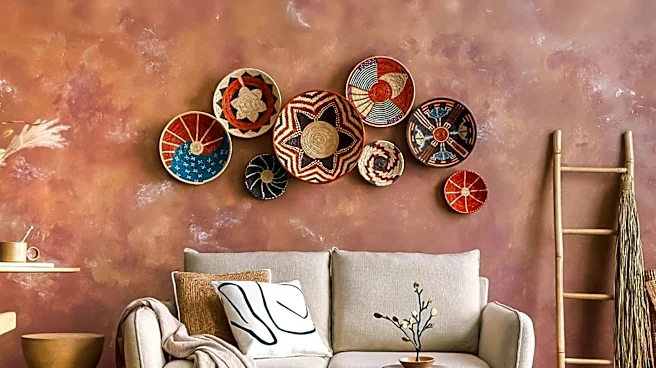
Gallery walls, composed of multiple smaller artworks, are a popular method for adding interest and personalization to home interiors. This approach contrasts with using a single large piece of art, offering variety and a unique aesthetic. Key to creating
an effective gallery wall is careful spacing and alignment of the frames. A general guideline suggests maintaining consistent spacing of 2-3 inches between frames to achieve a cohesive look. The choice between a gallery wall and a single large artwork often depends on the room's size and the homeowner's style preference. Gallery walls are particularly well-suited for eclectic, maximalist, or bohemian design styles, especially in bedrooms, where they can introduce a dynamic visual element. Various types of wall art, including canvas art, framed art, and prints, can be incorporated into gallery walls, each offering distinct advantages in terms of presentation and versatility.
Why It's Important?
The trend of utilizing gallery walls in home decor reflects a broader shift towards personalized and expressive interior design. This approach allows individuals to curate a collection of art that tells a story or showcases diverse interests, moving beyond the traditional single focal point. For the U.S. home furnishings and art industries, this signifies a demand for smaller, more versatile art pieces and framing options, potentially boosting sales in these segments. Consumers gain the flexibility to frequently update or expand their art collections without a major overhaul, fostering a more dynamic relationship with their living spaces. This also impacts interior designers and decorators, who must master the art of arrangement and spacing to create visually appealing and balanced gallery walls that complement existing furniture and room dimensions. The emphasis on careful planning and execution underscores the importance of thoughtful design in enhancing residential environments.
What's Next?
As the popularity of personalized home decor continues, we can expect to see further innovations in wall art display solutions. Manufacturers may introduce modular framing systems or digital tools that assist consumers in planning and visualizing their gallery walls. Retailers might offer curated gallery wall sets or design services to simplify the process for customers. Additionally, the integration of smart home technology could lead to interactive gallery walls, where lighting or digital displays can be adjusted to enhance the artwork. Educational content, such as online tutorials and workshops on gallery wall design, is also likely to expand, empowering more individuals to confidently create their own personalized art displays. This evolution will likely continue to drive consumer engagement with home decor and art.
Beyond the Headlines
Beyond their aesthetic appeal, gallery walls can serve as a powerful form of self-expression and a reflection of personal identity within the home. Each piece chosen for a gallery wall often carries sentimental value, represents a memory, or aligns with a personal passion, transforming a mere wall into a narrative canvas. This trend highlights a deeper cultural appreciation for art accessibility and the democratization of interior design, where individuals are encouraged to become curators of their own spaces. Ethically, it promotes sustainable consumption by encouraging the reuse and repurposing of existing art or the acquisition of pieces from local artists. The psychological impact of surrounding oneself with meaningful art can also contribute to well-being, fostering a sense of comfort and inspiration in daily life. This shift underscores the evolving role of the home as a sanctuary for personal expression and creativity.