





What's Happening?
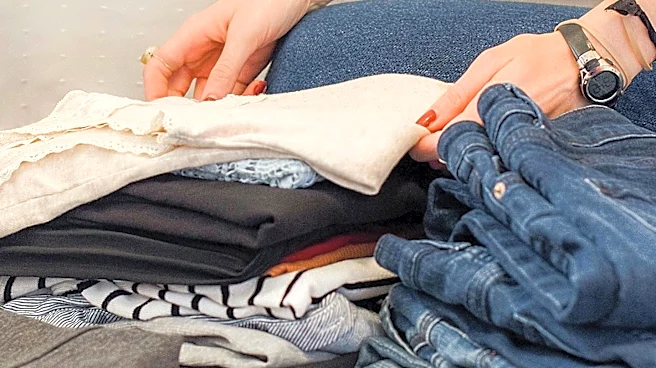
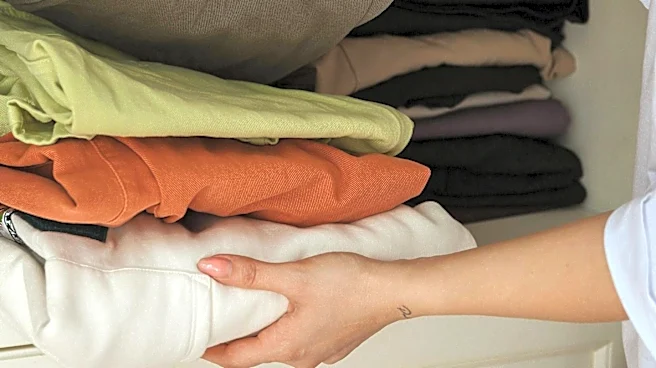
Marie Kondo, a Japanese organizing consultant, has popularized the KonMari Method, which includes a specific technique for folding clothes, particularly t-shirts, to stand upright in drawers. This method, detailed in her official guide, involves transforming
each garment into a compact rectangle that can maintain a vertical position. The process begins by laying the t-shirt flat, folding its sides inward to create a narrow rectangle, and then folding it again, often into thirds, to achieve a self-supporting bundle. These vertically folded items are then placed side-by-side in drawers, akin to files in a cabinet. This approach aims to improve visibility of all garments, making it easier to select items without disturbing the rest of the wardrobe. Kondo suggests filling drawers to approximately 90% capacity to allow for movement without over-compressing clothes.
Why It's Important?
The KonMari Method's vertical folding technique offers a practical solution for maximizing storage space and improving accessibility within wardrobes, which can significantly impact daily routines for many U.S. households. By allowing individuals to see all their clothing options at a glance, it reduces the time spent searching for specific items and can foster a more organized and less stressful start to the day. This method also promotes a more mindful approach to clothing storage, encouraging individuals to maintain order rather than simply stuffing clothes into drawers. For consumers, adopting this technique can lead to a more efficient use of existing furniture, potentially delaying or eliminating the need for additional storage solutions. The emphasis on maintaining order after initial organization also encourages sustainable habits, reducing clutter and promoting a more intentional relationship with personal belongings.
What's Next?
Individuals interested in adopting the KonMari Method can start by experimenting with a single drawer, focusing on everyday cotton t-shirts to master the folding technique. Once proficient, the method can be adapted to other garments like shorts, children's clothing, and certain intimate apparel. The ongoing benefit lies in consistently returning clothes to their designated vertical positions after washing and drying, which helps maintain the organized state. For delicate fabrics or items prone to wrinkling, Kondo's method suggests that hanging might be a more suitable alternative. The continued application of this technique is expected to lead to sustained wardrobe organization, making it easier to find and retrieve items without disrupting the entire system.
Beyond the Headlines
The KonMari Method extends beyond mere tidiness; it embodies a philosophy of intentional living and consumption. By encouraging individuals to keep only items that 'spark joy,' it subtly challenges the prevailing mass consumer culture, prompting a reevaluation of personal possessions. This approach can lead to a reduction in impulse purchases and a greater appreciation for the items one already owns. The act of folding and organizing, as prescribed by Kondo, can also be viewed as a meditative practice, fostering a sense of calm and control in one's personal environment. On a broader scale, if widely adopted, such practices could contribute to less waste and a more sustainable lifestyle, aligning with growing environmental consciousness in the U.S. and globally.