





What's Happening?
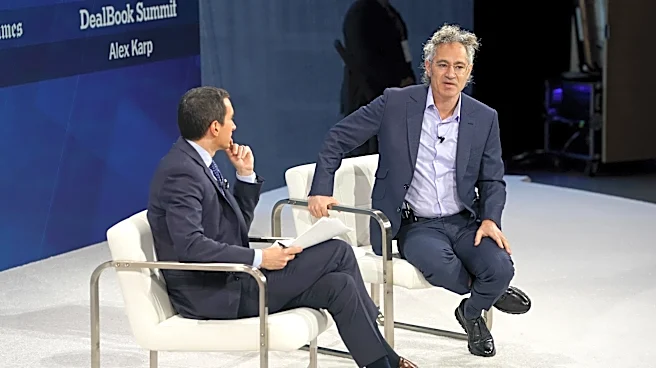
Palantir Technologies (NASDAQ: PLTR) stock closed at $163.59 on Wednesday, November 25, 2026, marking a 1.50% increase and a 14% rise since Friday's close. This surge follows the disclosure that director Peter Thiel purchased 850,100 Class A shares for
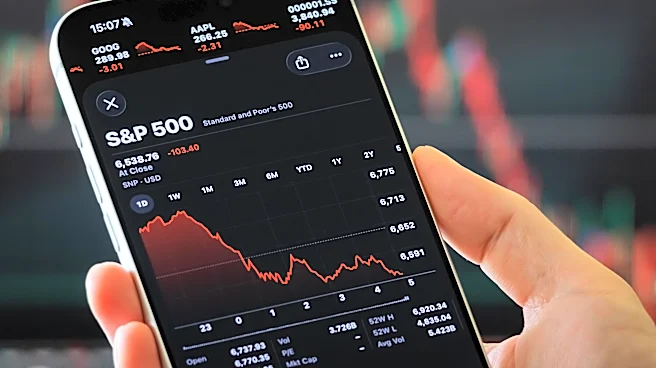
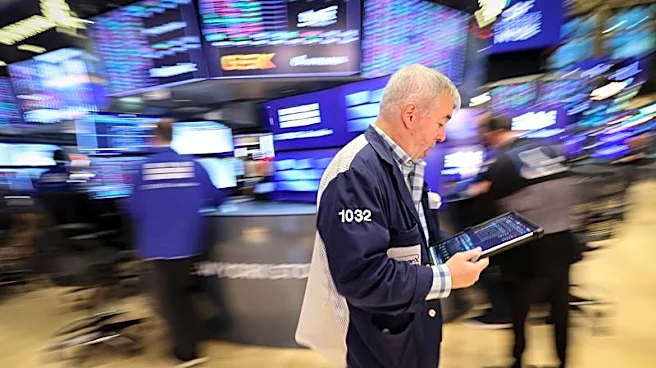
approximately $122.3 million on November 20, 2026. The purchase was made under a pre-arranged Rule 10b5-1 trading plan adopted on August 19, 2026. Palantir's stock performance on Wednesday contrasted with a general downturn in chip stocks, which experienced a morning selloff. The company, which specializes in software rather than hardware, demonstrated resilience, closing near its session high. Despite the recent gains, the stock remains 23% below its 52-week high. Analysts have an average price target of $222.90 for PLTR stock, with a median of $235.
Why It's Important?
Peter Thiel's substantial investment in Palantir Technologies is a significant vote of confidence from a key insider, potentially signaling strong future prospects for the company. Such a large purchase by a director can often influence investor sentiment positively, as it suggests that those with intimate knowledge of the company believe its stock is undervalued or poised for growth. This is particularly important given Palantir's position in the data analytics and artificial intelligence sectors, which are areas of intense market interest. The stock's ability to rise while chip stocks experienced a selloff indicates a potential decoupling from broader tech sector trends, suggesting that investors may view Palantir as a more stable or distinct investment. For U.S. investors, this development could highlight opportunities in software-centric AI companies, especially those with strong insider backing, and may lead to increased investor attention and trading volume for PLTR.
What's Next?
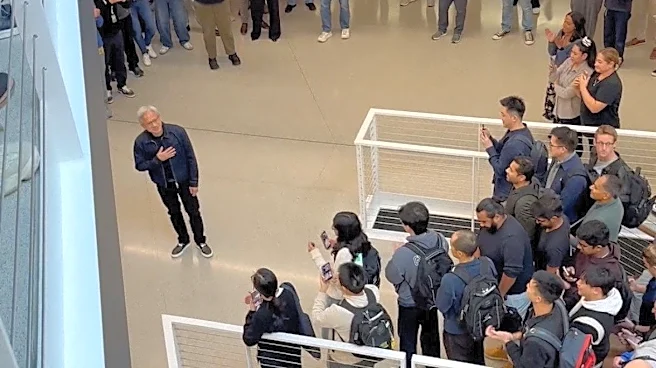
Investors will be closely watching Palantir's stock performance, particularly during the upcoming half-session on Friday, November 27, 2026, to see if the $165.00 after-hours price holds. Further Form 4 filings will be scrutinized for any additional purchases by Peter Thiel under his trading plan. Broader market sentiment towards AI stocks will also be influenced by events such as Nvidia CEO Jensen Huang's appearance before three House committees on December 1, which could impact the perception of the AI sector. Additionally, the Federal Reserve meeting on December 8-9, following a hotter-than-expected core PCE print, will be a key economic event that could affect overall market conditions. These factors, combined with Palantir's ongoing business developments and financial results, will determine the stock's trajectory in the near term. Analyst targets suggest potential upside, but market volatility and broader economic indicators will play a crucial role.
Beyond the Headlines
Peter Thiel's pre-arranged trading plan, under Rule 10b5-1, offers a glimpse into the strategic financial planning of corporate insiders. While the purchase is a positive signal, the pre-arranged nature means it wasn't a spontaneous decision based on immediate market conditions, but rather a planned execution. This highlights the nuanced interpretation required for insider trading disclosures. The resilience of Palantir's stock amidst a downturn in chip stocks also points to a potential shift in investor focus within the technology sector, favoring software and AI solutions over hardware. This could signify a broader market trend where companies providing advanced analytical capabilities are seen as more insulated from supply chain issues or cyclical hardware demands. The long-term implications could include a re-evaluation of valuation metrics for AI software companies and a greater emphasis on their unique value propositions in an increasingly data-driven economy.