




What's Happening?
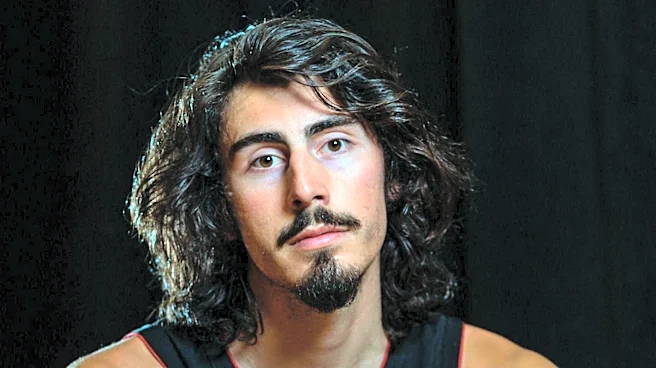
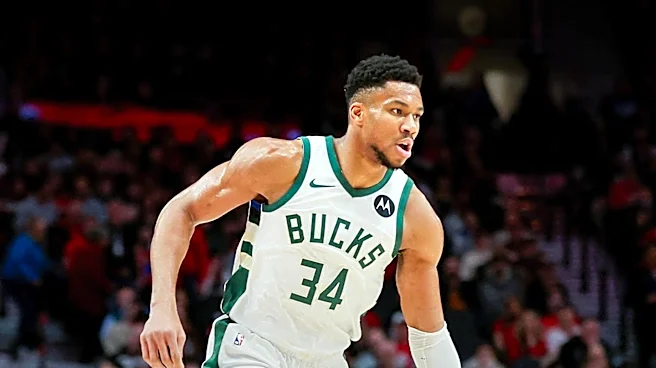
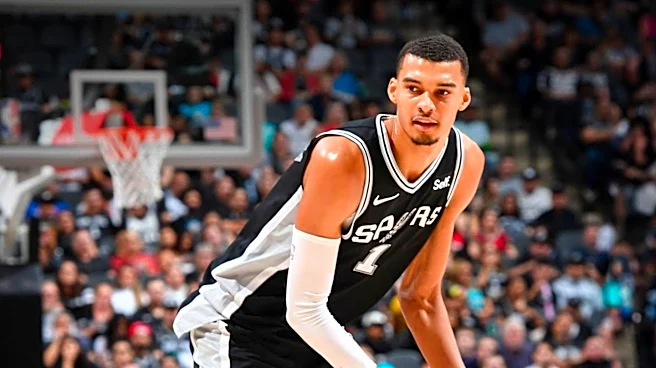
NBA player Stephon Castle recently commented on fellow player Victor Wembanyama's distinctive off-season workout regimen. According to Castle, Wembanyama has been engaging in unusual training methods, including working out with monks. Castle expressed
a sense of unpredictability regarding Wembanyama's activities, noting that he often sees Wembanyama in random locations on Instagram. While Castle acknowledged the potential benefits of these unique training approaches for Wembanyama's development, he indicated that he would not be joining him in these specific workouts. Instead, Castle stated his intention to support Wembanyama from a distance. The comments highlight the unconventional nature of Wembanyama's preparation for the upcoming season.
Why It's Important?
This insight into Victor Wembanyama's off-season training is important for several reasons within the U.S. sports landscape. Wembanyama is a highly anticipated young talent in the NBA, and his development is closely watched by fans, teams, and analysts. Unconventional training methods, such as those involving monks, could signify a new trend in athlete preparation, emphasizing mental and spiritual conditioning alongside physical training. If successful, Wembanyama's approach could influence other athletes and sports organizations to explore similar holistic training strategies. This could lead to a broader shift in how professional athletes in the U.S. approach their off-season, potentially impacting performance, longevity, and overall well-being. The focus on unique methods also generates significant media attention, contributing to Wembanyama's growing profile and the league's overall narrative.
What's Next?
The immediate next step will be to observe how Victor Wembanyama's unique off-season training translates into his performance during the upcoming NBA season. Sports analysts and fans will be keen to see if these unconventional methods provide a tangible advantage or contribute to his overall growth as a player. If Wembanyama demonstrates significant improvement or sustained high-level play, it could spark further interest and investigation into the efficacy of such training regimens. Other NBA players and teams might begin to explore similar holistic or unconventional approaches, potentially leading to a diversification of training practices across the league. Media coverage will likely continue to highlight Wembanyama's unique journey, potentially inspiring documentaries or in-depth features on his training philosophy.
Beyond the Headlines
Beyond the immediate impact on Wembanyama's career, his embrace of unconventional training, such as working with monks, touches upon broader cultural and psychological dimensions within professional sports. This approach suggests a potential shift away from purely physical conditioning towards a more integrated understanding of athletic performance, incorporating mental fortitude, mindfulness, and spiritual well-being. In a high-pressure environment like the NBA, where athletes face immense scrutiny and physical demands, exploring methods that enhance mental resilience could be a significant development. This could also open conversations about the role of non-traditional practices in optimizing human potential, not just in sports but in other demanding professions. The public's reaction to such methods could also reflect evolving attitudes towards holistic health and performance optimization in American society.