
What's Happening?
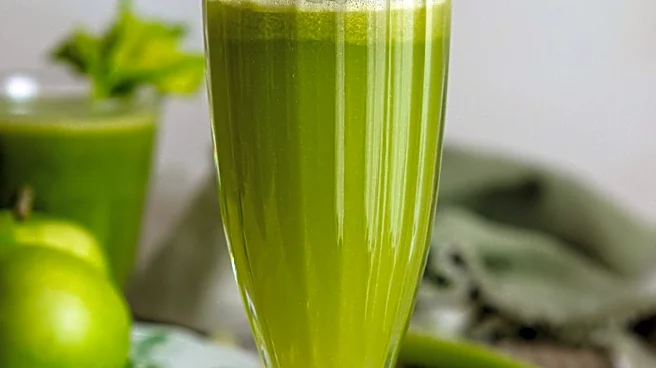
A recent analysis of juicer types indicates that cold press juicers are superior for processing leafy greens like kale and celery, yielding a thicker, more substantial juice. In contrast, centrifugal juicers,
which operate at higher speeds, are more effective and faster for hard produce such as carrots and apples, producing a thinner juice. America's Test Kitchen found that kale juice from slow juicers was almost like a milkshake, while fast machines made it thinner. Consumer Reports noted that centrifugal juicers handle hard produce well and are generally less expensive. The speed difference is significant, with centrifugal machines processing a pound of carrots in about 39 seconds, compared to approximately 1 minute 47 seconds for slow juicers. For grapes, slow juicers yielded more juice, at 11 ounces per batch versus 9.2 ounces from fast juicers.
Why It's Important?
This distinction in juicer performance is crucial for U.S. consumers and the health and wellness industry. As juicing continues to be a popular trend for dietary supplementation, understanding the optimal equipment for different produce types can significantly impact nutritional intake and user satisfaction. Consumers aiming to maximize the yield and quality of green juices, often sought for their high nutrient density, will find cold press juicers a more suitable investment despite their higher cost and slower operation. Conversely, those prioritizing speed and cost-effectiveness for common fruits and vegetables might opt for centrifugal models. This information helps consumers make informed purchasing decisions, aligning their juicer choice with their specific dietary goals and preferred produce, thereby influencing sales and market demand for different juicer technologies.
What's Next?
Given these findings, manufacturers may increasingly market juicers based on their specialization for either greens or hard produce, potentially leading to more niche product development. Retailers might adjust their display and sales strategies to educate consumers on the benefits of each juicer type for specific uses. For consumers, this information will likely drive more targeted purchases, with serious green juice enthusiasts gravitating towards cold press models, while casual juicers or those focusing on harder fruits and vegetables may continue to favor centrifugal options. The emphasis on 'what touches your juice' regarding plastic and steel parts also suggests a growing consumer demand for transparency in material composition, which could influence future product design and labeling standards in the U.S. market.
Beyond the Headlines
The nuanced differences between cold press and centrifugal juicers extend beyond mere efficiency to broader implications for health and sustainability. The debate over whether juicing is healthier than eating whole fruits and vegetables, as highlighted by Mayo Clinic's stance that juicing is no healthier and removes fiber, underscores a critical public health discussion. While juicing can be a convenient way to increase produce intake, the loss of fiber is a significant nutritional trade-off. Furthermore, the concern over materials like BPA in plastic parts reflects a growing consumer awareness of food safety and environmental impact. This trend suggests a future where juicer design will not only focus on performance but also on health-conscious materials and sustainable manufacturing practices, influencing the entire supply chain from production to consumer use and disposal.