

What's Happening?
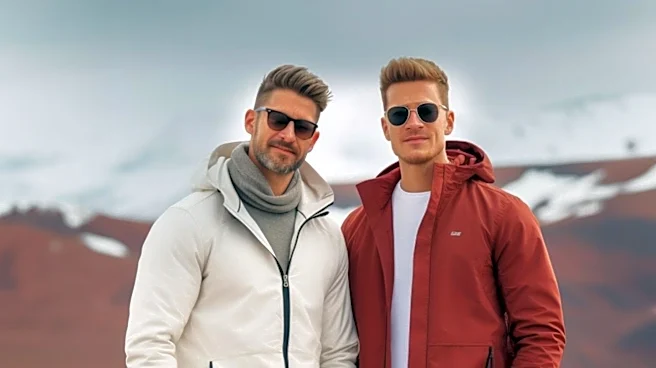
The men's wear market is experiencing a significant shift, with outdoor sports brands like Arc'teryx and Descente gaining prominence as new luxury symbols. This trend is driven by a change in consumer values, moving away from traditional luxury items
like watches and cars towards experiential consumption and healthy lifestyles. The ability to participate in activities such as skiing and cross-country running has become a high-level indicator of wealth and leisure. Consequently, these outdoor brands are increasingly fulfilling the social identification function previously held by traditional business men's wear. This has led to a structural recession in the traditional men's wear market, with many brands now transforming their product lines to incorporate features like wind resistance, waterproofing, and lightweight design, or acquiring outdoor sports sub-brands to adapt to the evolving consumer demand.
Why It's Important?
This transformation in the men's wear market signifies a broader cultural shift in the U.S. and globally, where health, wellness, and outdoor activities are becoming central to lifestyle and status. For U.S. consumers, this means a wider array of apparel options that blend functionality with luxury, catering to an active lifestyle. Traditional U.S. men's wear brands face the challenge of adapting to this trend, either by innovating their product offerings or risking market share. The rise of 'sports luxury' also impacts the retail landscape, with increased demand for specialized outdoor gear and a potential decline in sales for conventional business attire. This shift could also influence investment patterns, directing capital towards brands that successfully merge performance with lifestyle appeal, and away from those struggling to redefine their relevance in a changing market.
What's Next?
The trend of outdoor sports influencing luxury fashion is expected to continue, with more traditional men's wear brands likely to invest in research and development to integrate technical parameters and functional designs into their collections. We may see further acquisitions or collaborations between established fashion houses and outdoor gear manufacturers. The market will likely become more saturated with 'sports luxury' offerings, potentially leading to increased competition and a need for brands to differentiate themselves beyond basic functionality. Consumers can anticipate a continued evolution in men's fashion, emphasizing comfort, versatility, and performance, suitable for both active pursuits and daily wear. The long-term success of brands will depend on their ability to maintain authenticity while adapting to these evolving consumer preferences.
Beyond the Headlines
The emergence of outdoor sports brands as luxury symbols reflects a deeper societal value placed on well-being, adventure, and a connection to nature. This shift challenges traditional notions of luxury, which often emphasized exclusivity and material possessions, by instead highlighting experiences and a healthy, active lifestyle. Ethically, this trend could promote more sustainable practices within the fashion industry, as outdoor brands often prioritize durability and environmental considerations. Culturally, it signifies a move towards a more casual yet sophisticated aesthetic, blurring the lines between athletic wear and everyday fashion. This could also lead to a re-evaluation of dress codes in various professional and social settings, as functional and comfortable attire gains wider acceptance and prestige.