






What's Happening?
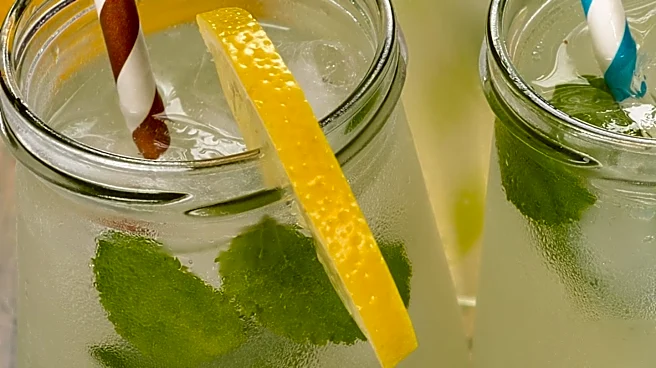
American lemonade, exemplified by brands like Calypso, is characterized by its sweet, non-carbonated profile, distinguishing it from other global lemon-flavored beverages. This style of lemonade is designed to be a still drink, focusing on a fruity flavor without
the fizz found in carbonated options. The market for lemon-flavored drinks is diverse, with variations in taste, sweetness, and origin. For instance, Italian Limonata, such as San Pellegrino, is known for its intense, tarter flavor and is often carbonated, while Turkish Limonata offers a balance of sweet and sour, typically with light carbonation. The sugar content in these beverages varies significantly, with some brands using sweeteners to reduce calories. Consumers are advised to check ingredient lists for lemon juice percentage and sugar content to match their preferences. The American preference for a sweeter, non-carbonated lemon drink positions it as a distinct category within the broader lemon beverage market.
Why It's Important?
The emphasis on sweet, non-carbonated American lemonade highlights a significant consumer preference within the U.S. beverage market. This trend impacts product development and marketing strategies for beverage companies, as they cater to a demand for still, fruit-forward drinks. The distinction from carbonated European limonatas also reflects cultural differences in taste and beverage consumption. For U.S. consumers, this means a readily available selection of sweeter, non-fizzy options, often perceived as a classic American refreshment. The market's segmentation by carbonation and sweetness levels allows for a wider range of choices, but also requires consumers to be aware of these differences when selecting a product. This focus on specific flavor profiles can influence ingredient sourcing, production methods, and competitive positioning among beverage manufacturers in the U.S.
What's Next?
The continued demand for sweet, non-carbonated American lemonade suggests that beverage companies will likely continue to innovate within this category, potentially exploring new flavor combinations or natural sweeteners to meet evolving consumer health preferences. As global beverage trends influence the U.S. market, there might be an increased introduction of European-style carbonated limonatas, which could lead to a more competitive landscape and a broader array of choices for American consumers. Brands may also focus on transparent labeling regarding sugar content and lemon juice percentage to appeal to health-conscious buyers. The ongoing evolution of consumer tastes and the drive for healthier options will shape the future development of both still and sparkling lemon-flavored beverages in the U.S. market.
Beyond the Headlines
The preference for sweet, non-carbonated American lemonade can be seen as a reflection of broader U.S. culinary and cultural tastes, which often lean towards sweeter profiles in beverages and foods. This contrasts with European preferences, where tarter and often carbonated lemon drinks are more common. This divergence in taste preferences can influence international trade and the global marketing strategies of beverage companies. Furthermore, the discussion around sugar content in these drinks touches upon public health concerns and the ongoing debate about sugar consumption in the U.S. The availability of diverse lemon-flavored options, from intensely tart to distinctly sweet, also speaks to the increasing sophistication of the beverage market and consumers' desire for tailored experiences, moving beyond generic soft drinks to more specialized and culturally specific offerings.