



What's Happening?
Home exterior design is increasingly focusing on the 60-30-10 rule for selecting shutter colors, a method that distributes color across three precise proportions to create a balanced facade. This rule allocates 60 percent for the dominant shade, typically
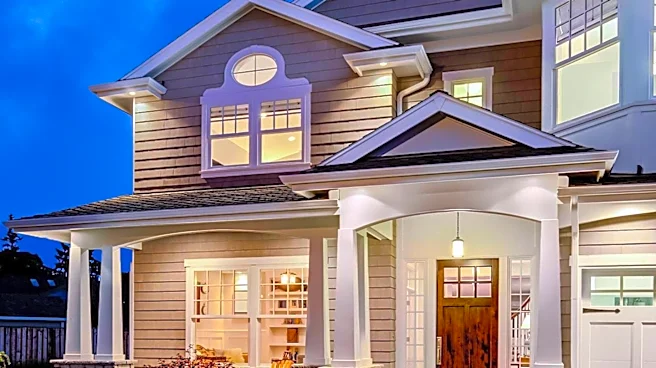
the walls, 30 percent for a secondary color like shutters or base trim, and 10 percent for accent elements such as the front door or specific architectural details. According to AD Magazine, this approach ensures that shutter colors are not chosen in isolation but are integrated into the overall composition, considering factors like facade materials, exterior lighting, and the surrounding environment. The goal is to enhance the home's aesthetic rather than disrupt it, making the shutters appear as an intentional part of the original design. The article highlights that certain architectural styles are tied to specific colors, and local zoning plans or historic preservation offices may limit authorized colors for facades, emphasizing the importance of fitting within a larger visual context.
Why It's Important?
The application of the 60-30-10 rule in home exterior design is important for U.S. homeowners and the housing industry as it provides a structured approach to achieving visually appealing and cohesive property exteriors. This method can elevate property values by ensuring a sophisticated and intentional look, moving beyond arbitrary color choices that can make a facade appear unfinished. For real estate, homes that adhere to such design principles are likely to be more attractive to potential buyers, potentially leading to quicker sales and higher market prices. The emphasis on regional and architectural appropriateness for shutter colors also promotes a sense of community aesthetic and preserves historical integrity in certain areas, impacting local housing markets and urban planning. Furthermore, understanding these design principles can empower homeowners to make informed decisions, avoiding costly missteps and enhancing their home's curb appeal, which is a significant factor in the U.S. housing market.
What's Next?
Homeowners considering exterior renovations, particularly shutter repainting, are advised to consult local municipal offices regarding zoning plans and authorized color palettes. This step is crucial, especially in areas near historic monuments where preservation offices may impose specific color schemes. The trend suggests a continued move towards more thoughtful and integrated exterior design, with professional designers and architects likely to further popularize and refine such rules. We can expect to see more resources and tools emerge to help homeowners apply the 60-30-10 rule effectively, potentially including online visualizers or design consultations. The focus on harmonizing shutter colors with the overall architectural style and environment will likely influence paint manufacturers and home improvement retailers to offer curated color palettes and guidance tailored to these design principles, making it easier for consumers to achieve a balanced and aesthetically pleasing home exterior.
Beyond the Headlines
Beyond the immediate aesthetic benefits, the adoption of structured design rules like the 60-30-10 principle reflects a broader cultural shift towards intentionality and craftsmanship in home design. This approach moves away from transient trends and towards timeless elegance, suggesting a deeper appreciation for architectural integrity and visual harmony within communities. Ethically, it encourages homeowners to consider their property's impact on the neighborhood's overall aesthetic, fostering a sense of collective responsibility for urban and suburban landscapes. Legally, the mention of local zoning and historic preservation offices highlights the increasing regulation and oversight in exterior home modifications, underscoring the balance between individual property rights and community standards. This trend could also lead to a resurgence in demand for skilled design professionals who can expertly apply these principles, further professionalizing the home improvement sector and emphasizing the value of thoughtful design over mere decoration.